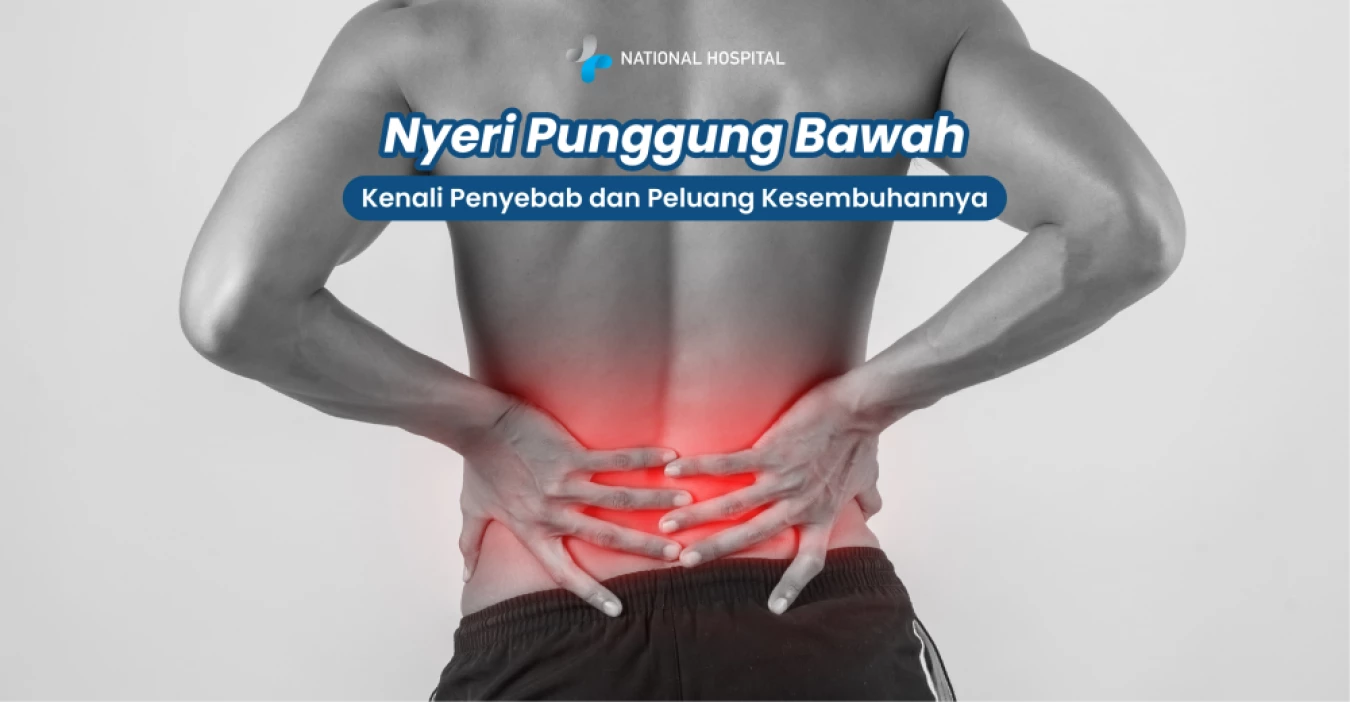
Low back pain is a common complaint experienced in everyday life. The sensation can vary, ranging from pain and soreness to aching or discomfort in the lower back area. However, did you know that low back pain is not simply caused by sitting in the wrong position or being overly active?
In some cases, this complaint may be a sign of an underlying medical condition that requires further examination. In a National Hospital podcast, Neurologist dr. Andreas Soejitno, Sp.N, CIPS, FIPP, explains more about low back pain, including its definition, various causes, and prospects for recovery. Here is what he has to say!
As the name suggests, low back pain refers to pain or discomfort felt in the lower back area. Simply put, this area can be described as extending from around the last rib as the upper boundary to the buttock crease as the lower boundary. Various sensations experienced in this area—such as pain, soreness, aching, or discomfort—may be categorized as low back pain.
A term commonly used by the general public is “waist pain.” However, anatomically, the area referred to as the waist may indicate the outer sides of the body. Therefore, in the context of this complaint, the term low back pain is more accurate in describing the location of the pain.
According to dr. Andreas, low back pain is actually a symptom rather than a single diagnosis. This is similar to fever. Fever is a symptom that can be caused by various conditions, such as infections, inflammation, or autoimmune diseases.
Likewise, low back pain can have many different causes and needs to be evaluated to determine the underlying source of the problem. In general, the causes of low back pain can be divided into several groups.
The majority of cases, approximately 70–80%, are mechanical or nonspecific in nature. These conditions are generally associated with daily habits and activities, such as:
In this group, the pain is generally benign or not dangerous and may be temporary. Nevertheless, the symptoms should still be monitored, especially if the pain persists or increasingly interferes with daily activities.
Other cases, approximately 10–30%, may be associated with more serious conditions and are not simply related to posture or daily activities. One example is malignancy, such as the spread of a tumor to the spine.
Another possible cause is infection. Indonesia has a relatively high incidence of tuberculosis (TB), making spinal infections another condition that may be encountered and should be considered when evaluating back pain.
In addition, low back pain may also be associated with autoimmune diseases. As awareness and diagnostic capabilities continue to improve, autoimmune conditions can be identified even in relatively young patients, including those in their 30s and 40s.
Not all cases of low back pain have the same characteristics. For some people, the pain is mainly felt in the lower back and does not spread to other parts of the body. However, in certain conditions, the pain may radiate or be associated with nerve compression.
When a nerve is compressed or affected, symptoms may differ from those of ordinary mechanical low back pain. Therefore, the characteristics, location, and radiation of the pain, along with any accompanying symptoms, are important information for doctors when determining the underlying cause.
The good news is that the potential for improvement and recovery largely depends on the underlying cause of the low back pain. If the cause is an infection and it is treated promptly with appropriate therapy, the chances of recovery can be high.
Likewise, if the pain is related to malignancy, appropriate treatment—including therapies such as radiation or surgery when necessary—can help manage the condition. For autoimmune diseases, adequate treatment can also help improve the patient's condition.
Meanwhile, for mechanical low back pain, various treatment options are available. However, not every patient requires the same approach. Treatment should be tailored to the diagnosis, condition, and individual needs of each patient.
Low back pain is often associated with daily activities and posture. However, it is important not to immediately assume that all back pain is simply a muscle problem or the result of poor positioning. Since low back pain is a symptom that can have many different causes, proper evaluation is necessary to identify the underlying problem.
Especially if the symptoms persist, recur, become more severe, or are accompanied by other symptoms, it is best not to rely solely on self-medication. Recognize the pain, do not ignore the symptoms, and find out what is causing them. With an accurate diagnosis and appropriate treatment, many causes of low back pain have the potential to achieve good treatment outcomes.
National Hospital is supported by experienced specialist doctors, as well as modern medical facilities and technology, to help evaluate the causes of pain and determine treatment that is appropriate for each patient's condition. Because a healthy back is essential for staying active and productive, don't wait until the pain gets worse—consult our specialists at National Hospital today.






 info@national-hospital.com
 628131000517
 Suggestion
 Login
Login.png)