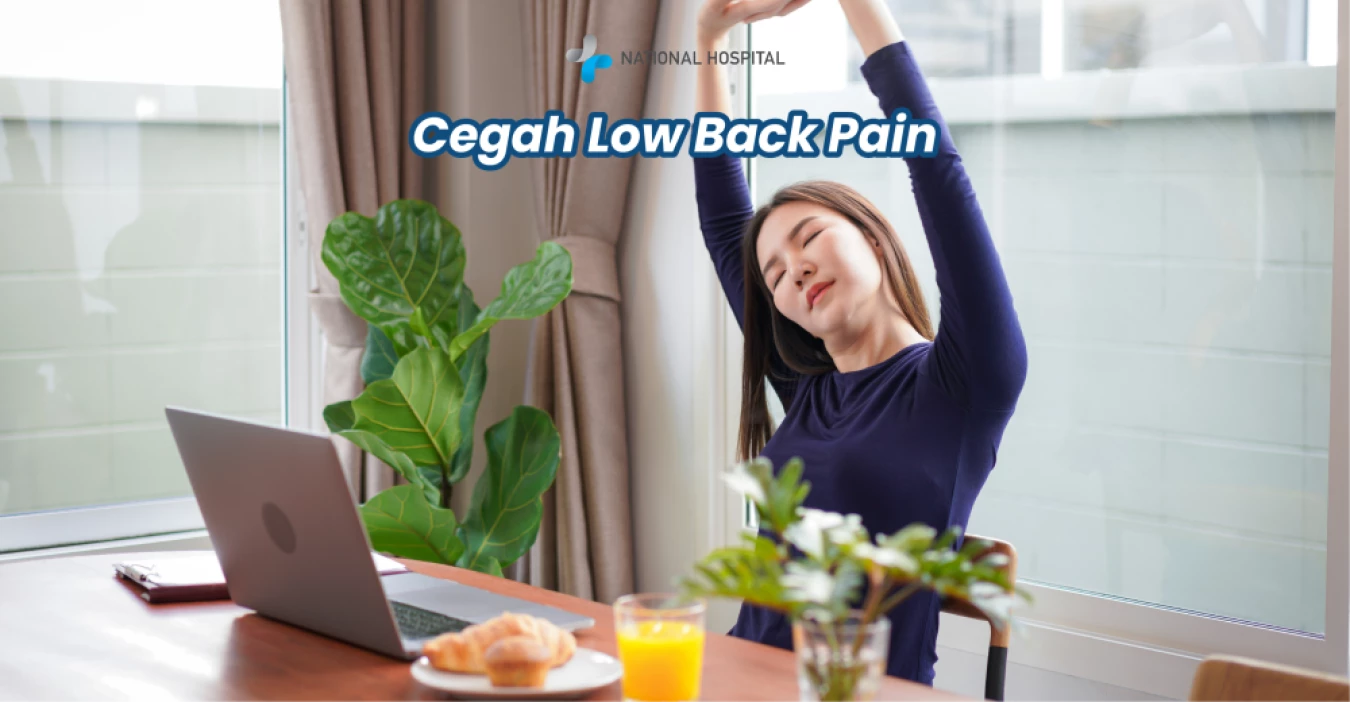
Low back pain is often considered a common complaint that will go away on its own. However, daily habits can play a role in increasing the risk of developing lower back pain. The good news is that not all risk factors are beyond our control.
There are various habits that can be improved to help maintain back health. On the National Hospital podcast, Dr. Andreas Soejitno, Sp.N, CIPS, FIPP, a Neurologist, explains that prevention should begin by recognizing the factors that can increase the risk of low back pain. Here is his explanation!
Age is one factor that cannot be controlled. As we get older, various organs and tissues in the body naturally undergo the aging process. This can naturally increase the risk of developing various health problems, including lower back pain.
People can maintain their health and slow down some of the biological effects of aging through a healthy lifestyle. However, chronological age will continue to advance. Therefore, maintaining back health should not only begin when we reach old age. Healthy habits should be developed starting now.
One factor that is easier to control is our lifestyle and daily habits, including the way we sit. Sitting in an improper position can affect back health, especially when repeated over long periods.
For office workers, sitting is a major part of the work routine. Consider how many hours an office worker spends sitting each day. This means that it is not only the sitting position that needs attention, but also how long we sit without changing position or moving around.
Maintaining good sitting posture is certainly important. However, even sitting with proper posture for too long can still become a risk factor. Therefore, the body needs changes in position and movement.
Try not to remain seated continuously. Give your body an opportunity to stand, walk, or engage in light activity between periods of work.
The term “sitting is the new smoking” is used to describe the growing concern about the effects of a sedentary lifestyle—spending too much time sitting and not moving enough. This does not mean that sitting literally has the same health effects as smoking in every respect.
However, the important message behind the term is that excessive sitting and insufficient movement are habits that should be taken seriously. This is particularly relevant for people who work for hours in front of a computer.
One trend that has emerged as a preventive measure is the use of standing desks. Many offices are beginning to use hydraulic or adjustable desks, which allow people to alternate between sitting and standing while working. The goal is not to stand all the time, but rather to give the body opportunities to change position periodically.
Between the vertebrae are structures called intervertebral discs, which are often described as cushions. According to Dr. Andreas, these discs receive nutrients through changes in pressure. Such changes in pressure can occur when we change our body position, for example, from sitting to standing or walking.
Therefore, making a habit of moving and changing positions can be one simple way to help maintain back health. The message is simple: do not allow your body to remain in one position for too long.
Another lifestyle factor that needs attention is smoking. The nicotine in cigarettes can interfere with blood flow to the intervertebral discs, or the cushions between the vertebrae. This can become one of the factors that increases the risk of developing lower back pain later in life.
Therefore, quitting smoking is beneficial not only for lung and heart health, but also as part of an effort to maintain spinal health.
Lack of physical activity, or a sedentary lifestyle, is another factor that deserves attention. Being inactive does not simply mean never exercising. A lifestyle that keeps us overly passive throughout the day can also play a role. For example:
These habits reduce the amount of movement our bodies get. Therefore, maintaining back health does not always have to start with intense exercise. Increasing daily activity and mobility is also important.
Among older adults, another factor that needs attention is osteoporosis. Osteoporosis causes bones to become more fragile, so bone health requires greater attention, particularly as we age.
In the podcast, Dr. Andreas also emphasized the importance of vitamin D and calcium in maintaining bone health. However, the need for supplementation should be tailored to each individual's condition and should not be undertaken indiscriminately.
Preventing low back pain does not always require complicated measures. Often, prevention can begin with simple habits, such as avoiding staying in one position for too long, remaining physically active, doing stretching exercises or exercises that help maintain muscle flexibility, staying fit, and avoiding habits that may increase risk, such as smoking.
We may not be able to stop the aging process, but there is still a lot we can do to maintain our health every day. For those who spend a great deal of time sitting at work, don't just remember to finish your tasks—remember to give your body opportunities to move and take a break from sitting.
Maintaining back health is not only about treating pain once it appears, but also about building healthy habits before problems arise. Prevention is important, but recognizing symptoms and knowing when to seek medical attention are equally important. If lower back pain persists, recurs, or does not completely go away, it is advisable to undergo a medical evaluation to determine the cause and receive appropriate treatment.
National Hospital provides support from specialist doctors, a multidisciplinary team, as well as facilities and treatment modalities that can help evaluate the causes of lower back pain and determine therapy according to each patient's condition. Because a healthy back helps us stay active and carry out our daily activities optimally, do not ignore persistent or recurring pain. Consult a doctor at National Hospital to receive the appropriate evaluation and treatment.






 info@national-hospital.com
 628131000517
 Suggestion
 Login
Login.png)