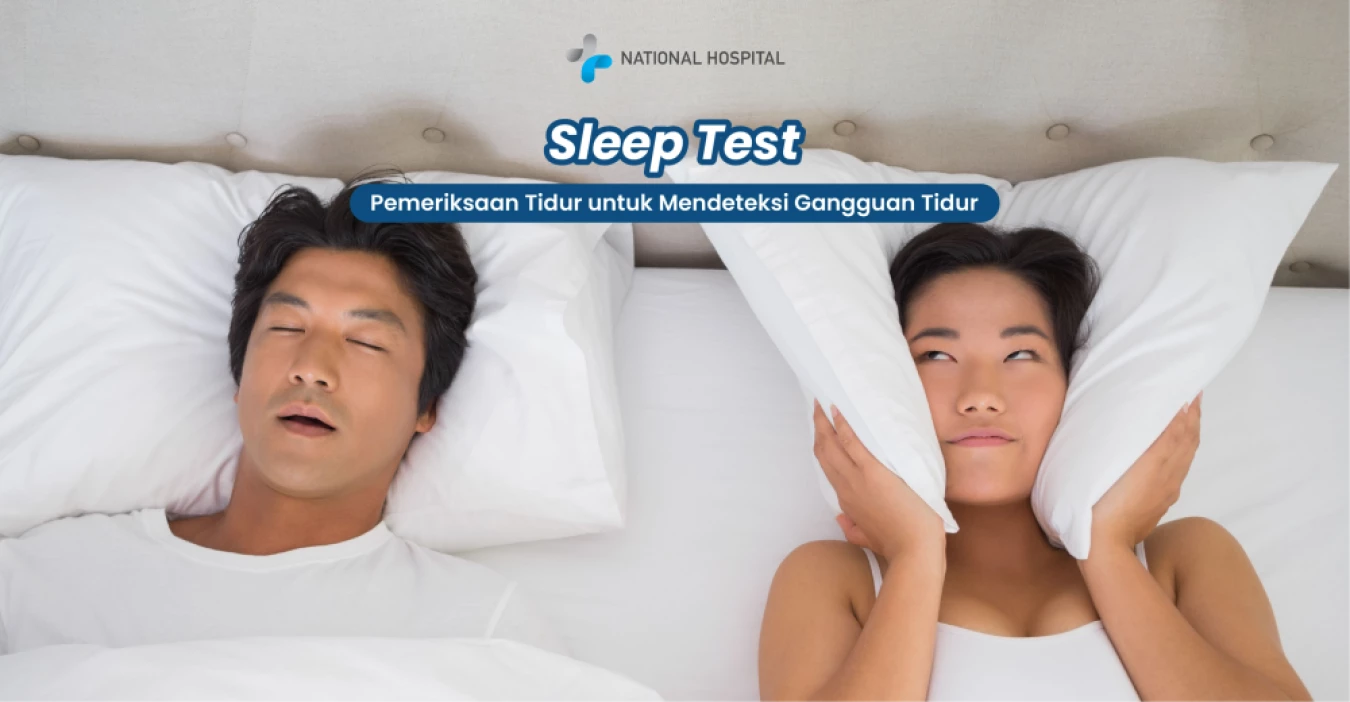
Quality sleep is an important part of overall health. However, not everyone realizes that sleep disorders can be a sign of certain health problems. Loud snoring, frequent waking during the night, pauses in breathing during sleep, or feeling excessively sleepy during the day can be signs of a sleep disorder that needs to be evaluated.
One of the examinations that can help assess a person’s sleep condition is a sleep test or sleep examination. Here is the explanation!
A sleep test is a diagnostic examination performed to monitor and record various body activities while a person is sleeping. Medically, a comprehensive sleep examination is known as polysomnography (PSG).
During the examination, several sensors are placed on specific parts of the body to monitor various bodily functions, such as brain activity, heart activity, breathing, eye movements, muscle movements, pulse rate, and blood oxygen levels.
With this data, doctors can obtain a more comprehensive picture of sleep quality and detect possible sleep disorders.
Doctors may recommend a sleep test if there are symptoms or conditions that suggest a sleep disorder. This examination can help doctors diagnose a sleep disorder, determine appropriate treatment, or evaluate the effectiveness of treatment that has already been given. Some conditions that may be associated with a sleep examination include:
The doctor will determine whether a sleep test is necessary based on the symptoms, medical history, and individual condition of each patient.
A sleep test uses several types of sensors to monitor various bodily functions during sleep.
EEG sensors are used to record the electrical activity of the brain or brain waves during sleep. Brain waves change during each stage of sleep, so this examination helps doctors identify sleep stages and detect certain abnormalities.
ECG sensors are placed on the chest to record the electrical activity of the heart. This data can help doctors assess the heart rhythm and heartbeat patterns during sleep.
EMG sensors are used to monitor muscle activity and movements, such as those of the face and legs. This examination can help detect abnormal muscle movements during sleep.
EOG sensors placed around the eyes are used to detect eye movements. This data helps determine sleep stages, including the REM (rapid eye movement) phase.
Respiratory sensors are used to monitor airflow through the nose and mouth as well as breathing patterns during sleep.
Special belts may be placed around the chest and abdomen to measure changes in movement or expansion of the body when a person breathes.
A pulse oximeter is usually placed on the fingertip to measure blood oxygen levels and pulse rate during sleep.
During certain examinations, cameras and audio may be used to record the patient’s condition while sleeping. These recordings can help doctors understand certain events during sleep and correlate them with data from the sensors.
A sleep test in a laboratory is generally performed overnight. Patients usually arrive in the afternoon or evening, are then shown to their bedroom, and change into comfortable sleepwear. Next, staff will attach several sensors to specific parts of the body according to the type of examination.
These sensors are used to monitor various bodily activities during sleep, such as brain activity, heart activity, breathing, eye movements, muscle movements, pulse rate, and blood oxygen levels. Once all the sensors have been attached, the staff will ensure that the equipment is functioning properly.
Before going to sleep, patients may relax and engage in light activities, such as reading or watching television. Once the patient falls asleep, all sensors will continuously record various bodily activities to help doctors assess the patient’s sleep condition and quality.
During the examination, the sleep laboratory may also use a low-light camera to record the patient’s condition. The camera is not used to continuously monitor the patient, but rather to help staff and doctors evaluate certain conditions during sleep, especially if there are unusual sensor results or findings that require further examination.
Video and audio recordings can also be compared with data from the sensors to provide a more comprehensive picture of the patient’s sleep condition. Although several sensors and wires are used, a sleep test is generally not painful. Patients may experience slight discomfort due to the sensors or because they are sleeping in an environment that differs from their usual surroundings.
To ensure optimal examination results, there are several things that should be prepared before undergoing a sleep test:
Avoid consuming caffeine and alcohol for at least eight hours before the examination, unless the doctor provides different instructions. Caffeine and alcohol can affect sleep patterns and may therefore influence the examination results.
It is advisable to avoid napping on the day of the examination. Napping may make it more difficult to fall asleep during the examination.
As much as possible, continue your usual daily activities and routines. A more natural sleep pattern during the examination will help doctors obtain more representative data about your sleep condition.
You are advised to shower before coming to the sleep laboratory. After showering, avoid using creams, lotions, oils, or hair care products because they may make it more difficult for the sensors to adhere properly to the skin or scalp. It is also advisable to avoid using nail polish or artificial nails, as they may affect the reading of the pulse oximeter placed on the finger.
Since the examination is usually conducted overnight, prepare the items needed for your stay, such as: comfortable pajamas or sleepwear, clothes for the following day, a toothbrush and personal hygiene items, makeup remover if you wear makeup, as well as other personal items you may need during your stay.
Continue taking your medication as directed by your doctor, unless the doctor instructs you to stop or change its use before the examination. Do not stop taking medication suddenly without consulting your doctor, as some types of medication may cause unwanted effects if discontinued abruptly.
Inform your doctor or the medical staff if you have a skin allergy or sensitive skin, especially to adhesive materials or medical tape. This information is important so that the staff can consider the most appropriate materials or methods for attaching the sensors and help minimize the risk of irritation during the examination.
A sleep test or sleep examination is a diagnostic examination that helps doctors evaluate various bodily functions during sleep and detect possible sleep disorders. This examination can provide information about brain activity, heart activity, breathing, eye movements, muscle activity, pulse rate, and blood oxygen levels. With proper examination and interpretation, sleep disorders can be identified so that patients can receive appropriate treatment.
National Hospital provides sleep test services to assist in the examination and evaluation of sleep disorders. If you or someone close to you experiences symptoms of a sleep disorder, consult a doctor to determine whether a sleep examination is necessary and to receive appropriate treatment recommendations.






 info@national-hospital.com
 628131000517
 Suggestion
 Login
Login