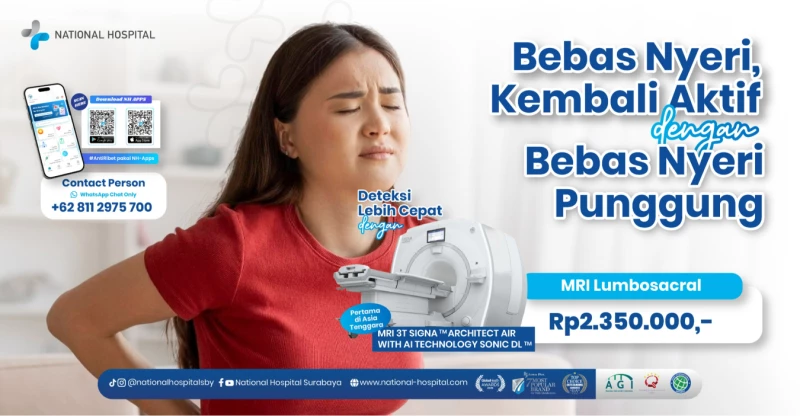
Low back pain (LBP) is a common complaint that can affect people of various ages and activity levels. There is a widespread belief that low back pain only affects older adults or people who frequently engage in physically demanding work. In reality, the causes and risk factors are much more diverse.
In a podcast hosted by National Hospital with Dr. Andreas Soejitno, Sp.N, CIPS, FIPP, a Neurologist, several myths and facts surrounding low back pain were discussed, ranging from risk factors to steps that can be taken to prevent and manage the condition. Here is what you need to know!
Age and physical activity can indeed be factors that increase the risk of low back pain. However, this does not mean that low back pain only affects older adults or people who perform physically demanding work. Today, younger people can also experience low back pain.
One of the contributing factors is a sedentary lifestyle. Habits such as sitting for too long, working in front of a computer, and engaging in little physical activity can place stress on the body and increase the risk of back problems. In addition to physical factors, psychological conditions should also be taken into consideration.
Stress, anxiety, and depression have also been associated with an increased risk of developing low back pain. This means that the burden experienced by a person is not always physical; it can also involve mental and psychological factors. Therefore, low back pain is not simply a problem affecting older adults or manual workers. Young people with inactive lifestyles can experience it as well.
Staying physically active is generally beneficial. However, among certain groups, such as athletes or people who engage in high-intensity physical activities, the risk of injury may increase when activities are performed using improper techniques. One example is weightlifting. The risk of pain or injury may increase if a person:
Therefore, it is not simply how much physical activity a person does that determines the risk of low back pain, but also how the activity is performed.
Not all cases of low back pain are signs of a serious medical condition. Statistically, around 70–80% of low back pain cases are mechanical in nature, meaning they are related to problems within the musculoskeletal system and are generally temporary.
However, some cases require further attention because they may involve warning signs, or red flags. Therefore, low back pain should not be ignored if it:
In such situations, an examination by a doctor or other healthcare professional is necessary to determine the cause and establish the appropriate treatment.
Treatment for low back pain should be tailored to the underlying cause and each patient's individual condition. In general, treatment may include medication, which can be combined with physiotherapy to support the recovery process.
If a more specific problem is identified, such as nerve compression or facet joint disorders, doctors may consider further treatment options such as interventional pain management, particularly when symptoms do not improve with standard treatment.
In certain cases that are more persistent or chronic, or that involve serious structural problems, surgery may be considered as an option when deemed necessary based on the results of a medical evaluation.
Low back pain is not only a problem experienced by older adults or people who frequently lift heavy loads. A sedentary lifestyle, prolonged sitting, improper exercise techniques, excessive physical activity, and psychological factors can all contribute to the development of low back pain.
Simple steps such as staying active within your physical capabilities, exercising regularly, stretching, avoiding prolonged sitting, and quitting smoking can all be part of an effort to maintain a healthy back. If your low back pain persists, keeps recurring, or causes concern, do not hesitate to consult a doctor for proper evaluation and treatment.
National Hospital is supported by advanced medical technology as well as an experienced and competent multidisciplinary team, allowing patients to receive comprehensive examinations and treatment tailored to their individual conditions. Don't wait until the pain begins to interfere more significantly with your daily activities. Get your low back pain evaluated at National Hospital and receive the appropriate assessment and treatment.





 info@national-hospital.com
 Suggestion
 Login
Login.png)