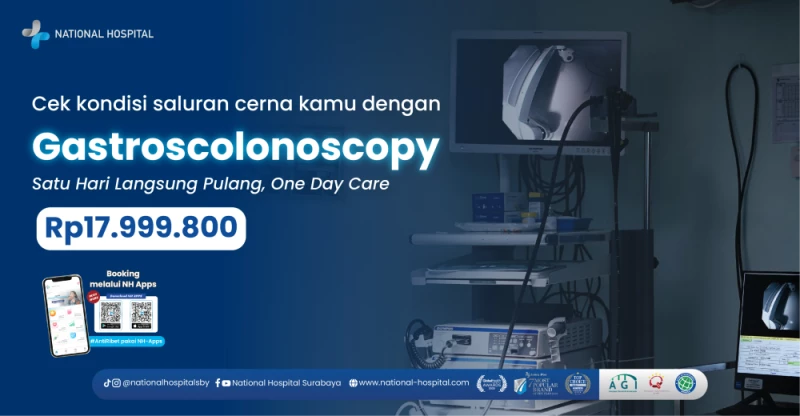
Maintaining good digestive health is essential. A healthy digestive system is not only reflected by regular bowel movements but also by the optimal function of the intestines. A healthy colon plays a vital role in overall well-being, including helping to reduce the risk of colon cancer, also known as colorectal cancer.
Unfortunately, modern lifestyles characterized by low fiber intake, physical inactivity, and high consumption of processed foods can negatively affect digestive health while increasing the risk of colon cancer. Therefore, understanding how to maintain digestive health and adopting healthy lifestyle habits are important steps in helping reduce the risk of this disease.
The intestines play a crucial role in maintaining overall health because they are responsible for absorbing essential nutrients from food. According to Dr. Husin Thamrin, Sp.PD-KGEH, FINASIM, an Internal Medicine Specialist and Consultant in Gastroenterology-Hepatology, a healthy digestive system allows the body to absorb nutrients efficiently, supporting energy production, metabolism, immune function, and overall quality of life.
Conversely, poor digestive health can affect many bodily functions, leading to reduced energy levels, mood changes, and a weakened immune system. These conditions may increase susceptibility to various diseases, including colon cancer.
Colon cancer, or colorectal cancer, is one of the most commonly diagnosed cancers worldwide and ranks as the fourth leading cause of cancer-related deaths globally. It affects both men and women and is no longer considered a disease that occurs only in older adults.
Over the past few decades, the incidence of colorectal cancer among individuals under the age of 50 has increased by approximately 2% each year. Unfortunately, many cases are diagnosed at an advanced stage because early symptoms are often mistaken for common digestive problems.
For this reason, maintaining gut health through a balanced diet, regular physical activity, and early screening is an important strategy to help lower the risk of colon cancer while supporting overall health.
During an interview, Dr. Husin explained that colon cancer does not develop overnight. Instead, it progresses gradually over many years through a combination of different factors. According to him, cancer may develop when:
When these natural defense mechanisms fail, damaged cells may continue to grow and eventually develop into colorectal cancer. This is why maintaining digestive health is an essential part of protecting overall health and reducing the risk of colon cancer.
Many everyday habits can unknowingly increase the risk of digestive disorders, including:
In addition to affecting digestive health, these lifestyle factors can also reduce concentration, productivity, and long-term health.
Dr. Husin emphasized that colon cancer is a multifactorial disease, meaning it is caused by a combination of genetic, environmental, and lifestyle factors rather than a single cause.
Some risk factors cannot be changed, including:
However, many risk factors are modifiable. Improving dietary habits, increasing physical activity, maintaining a healthy body weight, and adopting a healthy lifestyle are important measures that can help reduce the risk of colon cancer.
Colon cancer often causes no symptoms in its early stages. However, several warning signs require medical attention, including:
If any of these symptoms occur, particularly in individuals with a family history of colorectal cancer, it is important to consult a physician for further evaluation.
In addition to recognizing symptoms, family medical history should also be considered. Individuals with a first-degree relative — such as a parent, sibling, or child—who has been diagnosed with colorectal cancer have a higher risk of developing the disease themselves.
Dr. Husin explained that, according to guidelines in the United States, adults aged 45 years and older are recommended to undergo a Fecal Occult Blood Test (FOBT) as part of routine colorectal cancer screening. If the FOBT result is positive, a colonoscopy is recommended for further evaluation.
For individuals with a first-degree relative diagnosed with colorectal cancer, colonoscopy screening is generally recommended 10 years earlier than the age at which their relative was diagnosed. For example, if a father was diagnosed with colorectal cancer at age 48, his child should consider beginning colonoscopy screening at around age 38.
Colonoscopy remains the gold standard for colorectal cancer screening. During the procedure, physicians can directly examine the lining of the colon, detect precancerous polyps before they become cancerous, and even remove these polyps during the same examination.
According to Dr. Husin, many countries have prioritized colorectal cancer screening programs because prevention and early detection are significantly less costly than treating advanced-stage cancer. It is hoped that colorectal cancer screening programs in Indonesia will continue to expand, enabling more cases to be detected at an earlier, more treatable stage.
Maintaining a healthy digestive system begins with simple daily habits, including:
Digestive health plays a fundamental role in maintaining overall well-being. A healthy intestine supports nutrient absorption, strengthens the immune system, and helps reduce the risk of various diseases, including colon cancer.
Because colon cancer often develops without noticeable symptoms in its early stages, recognizing warning signs, adopting a healthy lifestyle, and undergoing recommended screening are essential steps toward early detection and successful treatment.
National Hospital is supported by experienced medical specialists and comprehensive diagnostic and treatment facilities to help detect, diagnose, and manage colon cancer according to each patient's individual needs. Remember, taking care of your digestive health today is an investment in your long-term health and quality of life.






 info@national-hospital.com
 Suggestion
 Login
Login.png)