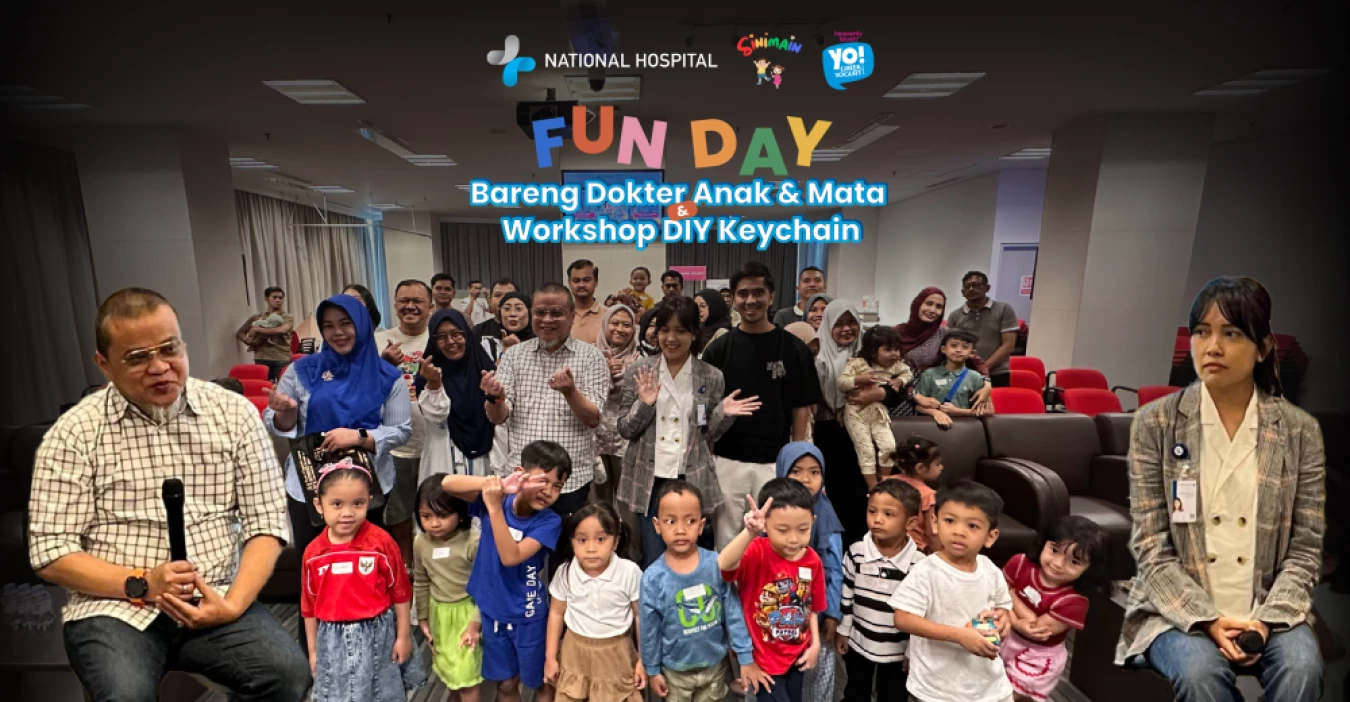
The role of parents in responding to the rapid advancement of technology is crucial, especially when it comes to their children's growth and development. Dr. Achmad Y. Heryana, Sp.A, and Dr. Putri Anya Universade, Sp.M, M.Ked(Klin) from National Hospital Surabaya shared several important points that parents should consider to ensure their children’s development and eye health remain on track.
Every child is unique, but parents can generally monitor and assess their growth and developmental milestones based on common age-related patterns. In today's digital era, where gadgets are increasingly prevalent, it is essential for parents to ensure that their children continue to grow and develop appropriately for their age.
"The use of gadgets is unavoidable today, but it must be managed wisely," said Dr. Achmad during the Fun Day event at National Hospital Surabaya on May 31, 2026.
Referring to guidelines from the American Academy of Pediatrics (AAP) and the Indonesian Pediatric Society (IDAI), managing screen time is not solely about limiting the number of minutes spent in front of a screen. It also involves considering content quality, context of use, parental supervision, and the impact on sleep, physical activity, school performance, and family relationships. Dr. Achmad outlined several recommendations:
Children aged 18 months and younger should avoid screen media, except for video calls. Children aged 18–24 months may be introduced to high-quality content under parental supervision. Children aged 2–5 years should be limited to a maximum of one hour of high-quality content per day. Children aged 6 years and older should be guided toward focused and balanced screen use.
"Screens should not interfere with sleep, school, physical activity, or family relationships. Use a family media plan," Dr. Achmad emphasized.
Parents should also pay close attention to their children's mental health. Children who experience inadequate sleep, excessive screen exposure, limited physical activity, poor dietary habits, and insufficient quality family interaction are more susceptible to emotional and behavioral issues. Several warning signs to watch for include:
"Persistent mood changes, social withdrawal, irritability, difficulty concentrating, excessive dependence on gadgets, or a loss of interest in activities they previously enjoyed. These signs do not always indicate a serious disorder, but they should prompt families to evaluate their routines and seek professional help if necessary," he explained.
During the same event, Dr. Putri Anya Universade stressed that children’s eye health should never be overlooked. According to World Health Organization (WHO) data from 2023, approximately 12 million Indonesian children experience visual impairments. Indonesia’s Ministry of Health has also reported a rise in cases of myopia (nearsightedness).
These eye health issues can often be prevented through appropriate measures, including monitoring visual development from an early age—particularly during the critical developmental period between 2 and 5 years old. Dr. Putri highlighted the importance of this stage for a child’s future vision.
"This golden period cannot be repeated. Early detection is the best investment in a child's visual future," she said.
Dr. Putri also warned that excessive screen time can negatively affect children’s eye health. One of the most significant risks is myopia, with the likelihood increasing two to three times when children spend more than three hours per day on screens. Other consequences include eye strain, sleep disturbances, and impaired visual development.
"Parents should also be alert to signs of vision problems, such as squinting while watching TV or reading, tilting the head or covering one eye when looking at objects, frequent eye rubbing or excessive blinking, and complaints of headaches while reading," she noted.
Parenting in the digital age is undoubtedly challenging. However, these challenges can be addressed through proper monitoring and guidance. Parents should establish healthy habits early, encourage a balanced lifestyle, maintain open communication, and seek professional assistance when needed. By doing so, they can help ensure that their children grow and develop in a healthy and optimal manner.






 info@national-hospital.com
 Suggestion
 Login
Login.png)