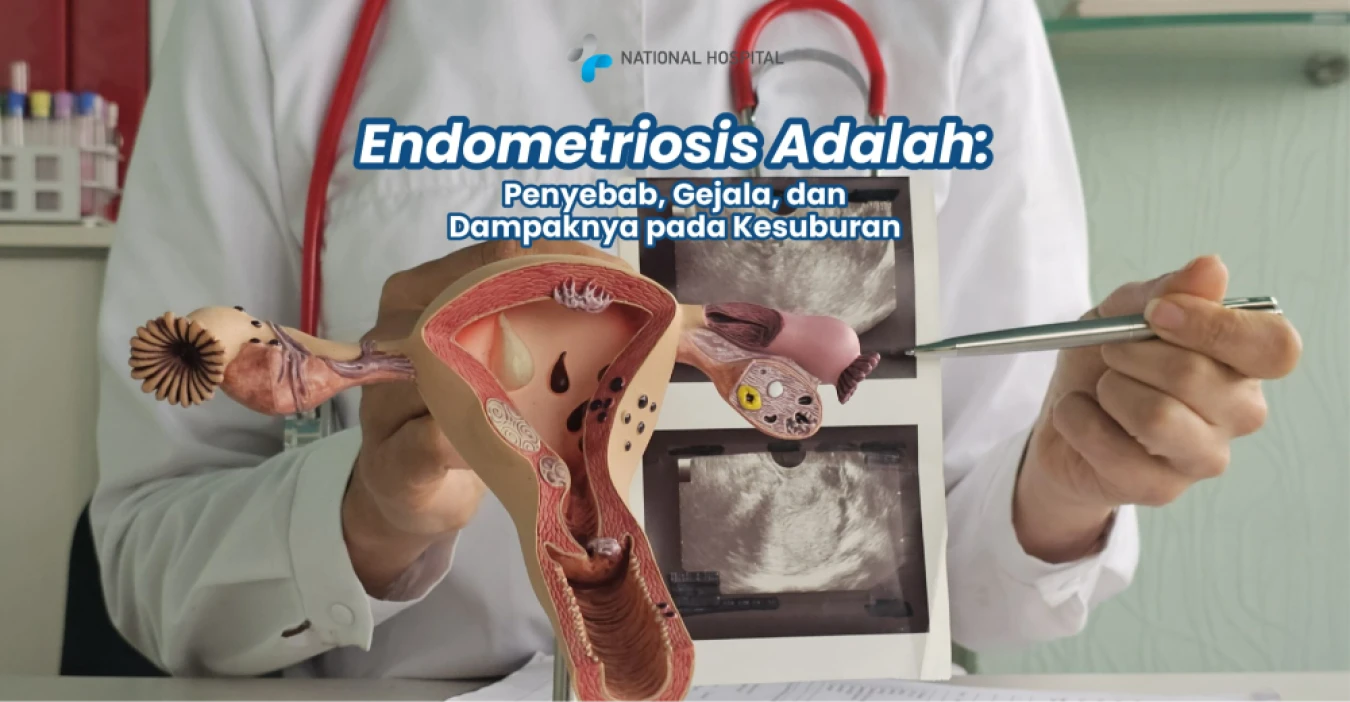
Severe menstrual cramps, persistent pelvic pain, and fertility problems can be signs of endometriosis. Many women consider severe menstrual pain normal, when in fact it may be a warning sign of an underlying medical condition that requires evaluation.
The earlier endometriosis is identified, the sooner appropriate treatment can be provided to help manage symptoms and protect reproductive health.
Endometriosis is a condition in which tissue similar to the lining of the uterus (endometrium) grows outside its normal location, such as on the ovaries, fallopian tubes, or tissues surrounding the pelvic organs. Endometriotic tissue shares characteristics with endometrial tissue and can respond to hormonal changes throughout the menstrual cycle.
This condition can trigger inflammation, localized bleeding, scar tissue formation, and adhesions involving surrounding organs. Broadly speaking, conditions involving endometrial-like tissue can be distinguished based on where the tissue is located:
External endometriosis occurs when endometrial-like tissue grows outside the uterus. Common locations include the ovaries, fallopian tubes, and pelvic tissues.
When endometriosis develops on the ovaries, it can form an endometrioma, commonly known as a chocolate cyst. This cyst contains old, thickened blood, giving it a brownish appearance. Endometriomas may also be associated with adhesions involving surrounding tissues or organs.
Adenomyosis occurs when endometrial-like glands and stroma are found within the muscular wall of the uterus (myometrium). In older terminology, this condition was sometimes referred to as internal endometriosis because the tissue is located within the uterine wall.
However, in current medical terminology, adenomyosis is distinguished from endometriosis as a separate condition. Adenomyosis can cause the uterine wall to thicken or the uterus to enlarge and is often associated with severe menstrual cramps and heavy menstrual bleeding.
These two conditions can occur at the same time, but not every woman experiences both.
Endometriosis symptoms can vary from one woman to another. However, the following symptoms should be taken seriously, particularly if the pain interferes with daily activities or occurs repeatedly.
Menstrual pain associated with endometriosis can be more intense than typical menstrual cramps. Pain may begin before menstruation, continue throughout the period, and sometimes persist afterward.
Pelvic pain may persist for an extended period and is not always related to the menstrual cycle. This can occur due to inflammation and irritation of tissues surrounding the pelvic organs.
Pain during or after sexual intercourse can be one of the symptoms of endometriosis. This discomfort may be associated with lesions, scar tissue, or adhesions in the pelvic area.
Some women with endometriosis may experience heavier menstrual bleeding or spotting between periods. Heavy menstrual bleeding is also commonly associated with adenomyosis, so medical evaluation is necessary to determine the underlying cause.
Endometriosis can affect fertility through inflammation, adhesions, and changes involving the ovaries or fallopian tubes. However, not all women with endometriosis experience difficulty getting pregnant.
The exact cause of endometriosis is not yet fully understood. One widely recognized theory is retrograde menstruation, a process in which some menstrual blood flows backward through the fallopian tubes into the pelvic cavity.
However, this is not the only proposed explanation. Genetic factors, immune system function, and other biological mechanisms are also believed to play a role in the development of endometriosis.
Factors that may be associated with an increased risk of endometriosis include:
Endometriosis treatment is tailored to the severity of symptoms, the location and extent of endometriotic tissue, the patient's overall health, and their pregnancy plans. Treatment aims to help relieve pain, manage disease progression, and address fertility-related needs.
Doctors may prescribe pain relievers, including nonsteroidal anti-inflammatory drugs (NSAIDs), to help reduce menstrual cramps and pelvic pain. Medication use should be tailored to the patient's condition and medical advice.
Hormonal treatments, such as hormonal contraceptive pills, progestins, or certain medications that affect reproductive hormones, may be used to help manage endometriosis symptoms.
Treatment selection should take the patient's condition into account. Hormonal therapy used to control symptoms is generally not prescribed as a way to improve pregnancy rates in patients who are actively trying to conceive.
Surgery, including laparoscopy, may be considered to treat endometriotic lesions, endometriomas, scar tissue, or adhesions when medically indicated.
For patients planning a pregnancy, the decision to undergo surgery should take into account its potential benefits and risks to ovarian function and future pregnancy chances.
Endometriosis is a chronic condition for which there is currently no treatment that guarantees a permanent cure. However, its symptoms can be managed through medication, hormonal therapy, or surgery, depending on individual needs.
Regular follow-up is also important to monitor the condition and determine the most appropriate treatment approach.
What Is the Difference Between Endometriosis and Adenomyosis?
Endometriosis and adenomyosis both involve tissue similar to the endometrium, but they differ in where the tissue develops.
Both conditions can cause menstrual pain and affect reproductive health. Endometriosis involving the ovaries can also lead to the formation of endometriomas, or chocolate cysts. Adenomyosis, meanwhile, is more commonly associated with heavy menstrual bleeding and an enlarged uterus.
Women with endometriosis can still become pregnant. However, in some cases, the condition may affect fertilization and fertility.
Treatment options may include fertility evaluation, certain surgical procedures, or assisted reproductive technologies such as in vitro fertilization (IVF). The most appropriate approach depends on the patient's reproductive health, age, and pregnancy plans.
If you experience severe menstrual pain, recurring pelvic pain, or concerns about fertility, do not ignore these symptoms. Consult an Obstetrics and Gynecology specialist at National Hospital. Proper examination and evaluation can help identify your reproductive health condition and determine the most appropriate treatment based on your individual needs.






 info@national-hospital.com
 Suggestion
 Login