Knee pain caused by osteoarthritis can have a major impact on quality of life. Simple activities such as walking, climbing stairs, standing for long periods, exercising, or even getting a good night’s sleep may become difficult due to persistent pain. In the early stages, symptoms can often be managed through lifestyle modifications, physical therapy, medications, or knee injections.
However, in some patients, joint damage may progress to an advanced stage where conservative treatments no longer provide adequate relief. In these situations, knee replacement surgery may be an effective treatment option. Here's what you need to know.
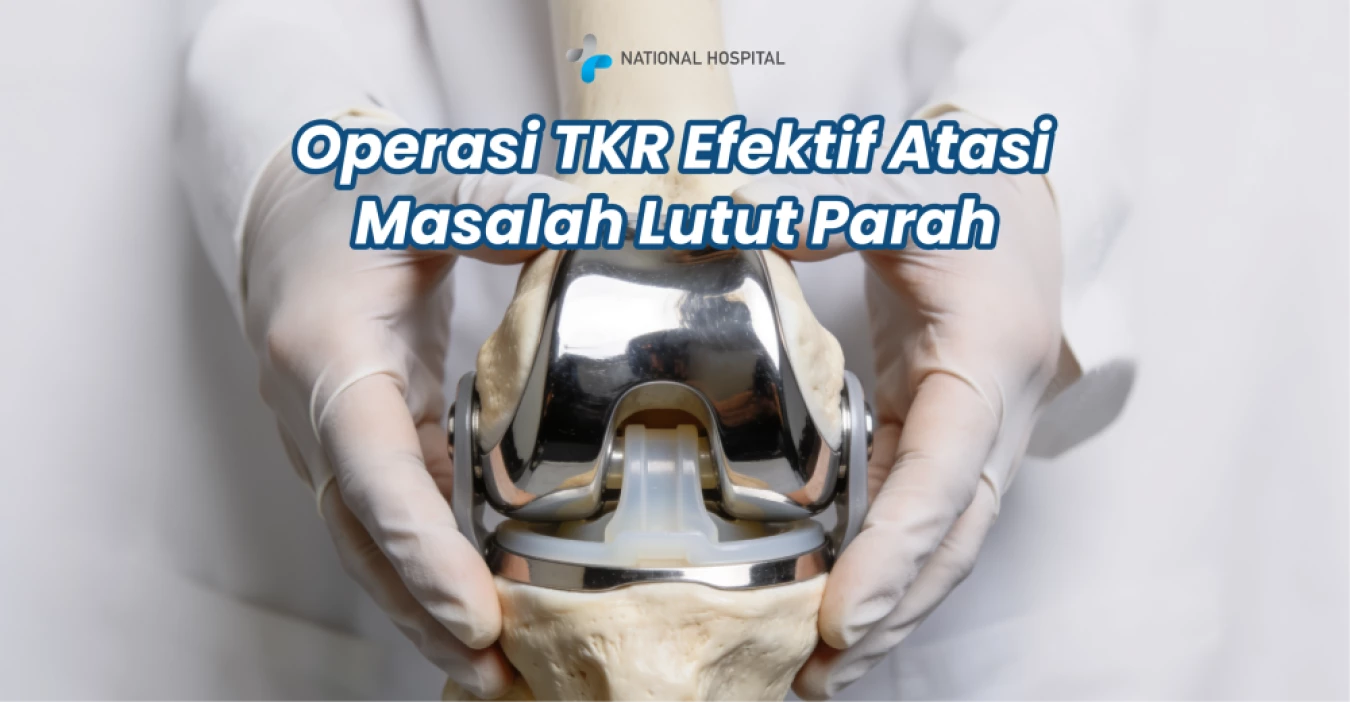
Knee replacement is a surgical procedure that replaces damaged parts of the knee joint caused by osteoarthritis or arthritis with a specially designed implant. The goal is to reduce pain, restore knee function, and improve the patient’s overall quality of life.
Many people assume that knee replacement always means replacing the entire knee joint. In reality, not every patient requires a total knee replacement. Generally, there are two types of knee replacement procedures:
Partial Knee Replacement (PKR), also known as Unicompartmental Knee Arthroplasty, is performed when damage is limited to a single compartment of the knee. In this procedure, only the damaged portion of the joint is replaced, while healthy bone, cartilage, and ligaments are preserved.
For appropriately selected patients, this procedure may offer faster recovery, more natural knee movement, and preservation of more of the patient’s native tissue.
Total Knee Replacement (TKR) is recommended when joint damage is more extensive and affects multiple compartments of the knee. During this procedure, the damaged joint surfaces are replaced with implants designed to restore knee function and alleviate pain.
The choice between Partial Knee Replacement and Total Knee Replacement should be based on a thorough evaluation by an orthopedic specialist experienced in hip and knee conditions.
Knee replacement is one of the most successful orthopedic procedures in modern medicine, with high patient satisfaction rates. In appropriately selected patients, the majority experience:
Many patients who previously struggled with walking, daily activities, or enjoying their hobbies are able to return to these activities more comfortably following surgery and proper rehabilitation.
Like any medical procedure, knee replacement surgery carries certain risks. However, it is generally considered a safe procedure when performed on carefully evaluated patients by an experienced medical team. Potential complications may include:
Fortunately, serious complications are relatively uncommon. Advances in surgical techniques, anesthesia, pain management, and modern recovery protocols have significantly reduced complication rates and improved patient outcomes.
One of the most common questions patients ask concerns implant longevity. Advances in implant materials and design have significantly improved durability. Studies show that most knee implants continue to function well for 15–20 years, and many last even longer.
Implant longevity depends on several factors, including the patient’s age, body weight, activity level, bone quality, and the surgical technique used.
Many patients still imagine knee replacement surgery as a procedure requiring a prolonged hospital stay and a difficult recovery. In reality, the implementation of Enhanced Recovery After Surgery (ERAS) protocols has transformed the patient experience.
For many patients who meet the appropriate criteria and do not have significant medical comorbidities, sitting, standing, and walking can begin within hours after surgery. Some patients may even be discharged on the same day or the following day, depending on their clinical condition.
This approach is designed to accelerate recovery, reduce complications, and help patients return to their daily activities sooner.
One of the primary goals of knee replacement surgery is to help patients regain the ability to enjoy activities that were previously limited by chronic knee pain. After successful rehabilitation, many patients are able to return to activities such as:
The level of activity achieved varies from person to person, but most patients experience a substantial improvement in quality of life compared to before surgery.
It is important to understand that not all patients with knee osteoarthritis require surgery, and not all surgical cases require Total Knee Replacement. Treatment decisions depend on several factors, including the patient’s age, activity level, location and severity of joint damage, degree of deformity, ligament condition, and treatment expectations.
For some patients, conservative treatment or knee preservation procedures may help maintain the natural joint for as long as possible. For others, Partial Knee Replacement may be a more suitable option than replacing the entire knee joint. Therefore, a comprehensive evaluation is essential to determine the most appropriate treatment for each individual.
If knee pain caused by osteoarthritis is beginning to limit your daily activities, don’t wait until the condition becomes more severe. Through the Hip & Knee Center at National Hospital Surabaya, patients can receive a comprehensive evaluation to determine whether conservative treatment, knee preservation procedures, Partial Knee Replacement, or Total Knee Replacement is the most appropriate option.
Our goal is not simply to perform surgery, but to help every patient move comfortably, stay active, and enjoy a better quality of life. Trust your knee health to our experienced team at National Hospital.






 info@national-hospital.com
 Suggestion
 Login
Login