When a doctor recommends surgery, it is completely natural to feel anxious. One of the most common questions is which surgical method will be used.
In modern medicine, there are two main approaches: open surgery (laparotomy) and minimally invasive surgery (laparoscopy). Understanding the differences between these two procedures is important so you can better prepare yourself—from the operation itself to the recovery process at home.
In simple terms, laparotomy is a conventional or “open surgery” method.
The surgeon makes a single large incision in the abdominal area to directly view and treat the affected organs. This method has been used for a long time and remains effective for complex cases.
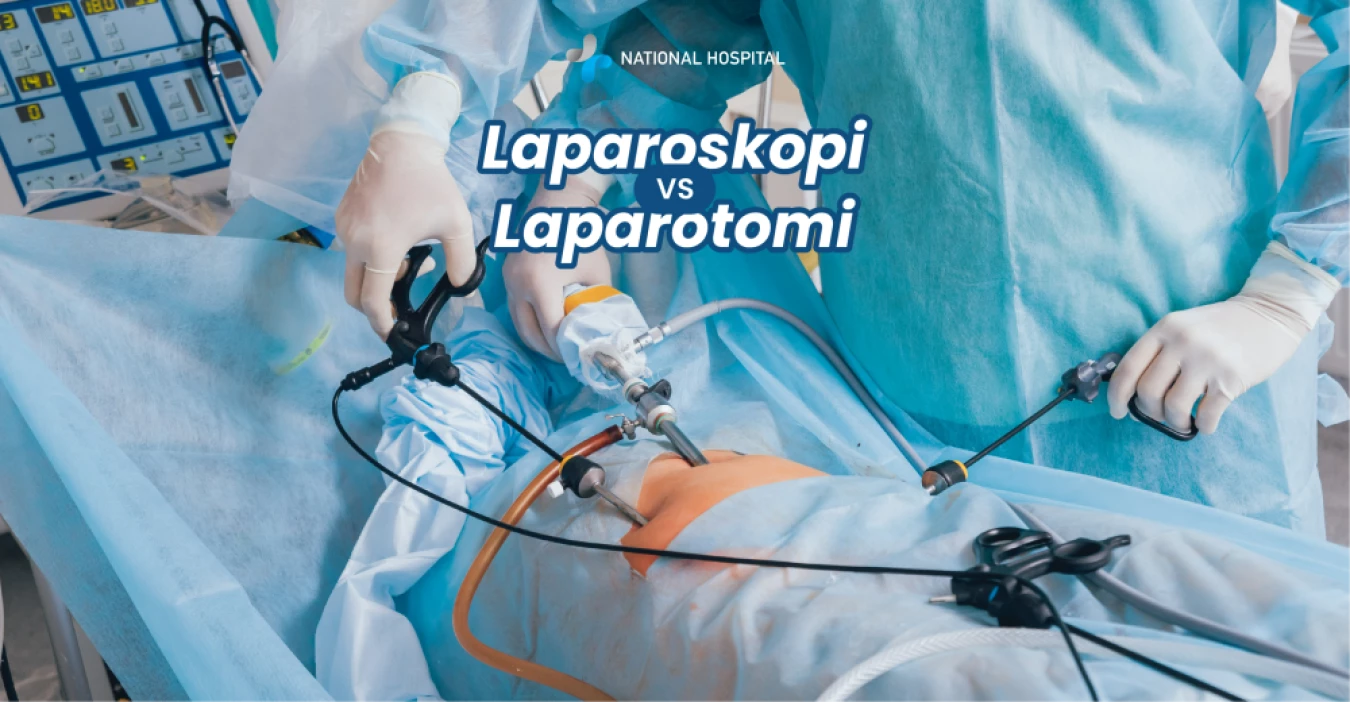
On the other hand, laparoscopy, often referred to as keyhole surgery, is a modern surgical technique that uses very small incisions.
Because of its minimally invasive nature, laparoscopy is generally more comfortable for patients while still delivering optimal results. At our facility, this technology continues to be advanced to provide the best possible care.
Although both procedures aim to diagnose or treat conditions within the abdomen, they differ significantly in several aspects:
In laparotomy, a single large incision—typically around 10 to 20 cm—is required.
In contrast, laparoscopy only requires 2 to 4 small incisions, each measuring approximately 0.5 to 1 cm, resulting in minimal scarring.
Laparotomy uses standard surgical instruments, with the surgeon’s hands directly accessing the abdominal cavity.
Laparoscopy uses specialized instruments, including a thin tube with a camera called a laparoscope, which transmits high-resolution images to a monitor in the operating room.
In laparotomy, the surgeon views the organs directly with the naked eye.
In laparoscopy, the camera provides magnification, allowing the surgeon to see blood vessels and tissues in greater detail on a high-definition screen, improving precision.
Due to the larger incision and greater muscle involvement in laparotomy, postoperative pain is typically more significant and may require stronger pain medication.
Laparoscopy, with its smaller incisions, generally results in less pain and greater comfort during recovery.
Patients undergoing laparoscopy usually stay in the hospital for about 1–2 days.
In contrast, laparotomy often requires a longer hospital stay—typically around 5 days or more, depending on the complexity of the procedure.
For those with active lifestyles, recovery time is a key consideration.
Laparoscopy patients can usually return to normal activities within 1–2 weeks.
Meanwhile, laparotomy patients may need 4 to 6 weeks for full recovery, especially before resuming heavy activities.
The choice of surgical method ultimately depends on your medical condition and your doctor’s recommendation. However, if you are looking for an option that offers faster recovery and minimal pain, laparoscopy may be a preferred choice.
At National Hospital, we provide NH Scope services, supported by experienced specialists and advanced medical technology. We are committed to delivering safe, minimally traumatic surgical experiences for every patient.
By understanding the differences between laparoscopy and laparotomy, you can have a more informed discussion with your medical team and make the best decision for your health.






 info@national-hospital.com
 Suggestion
 Login
Login