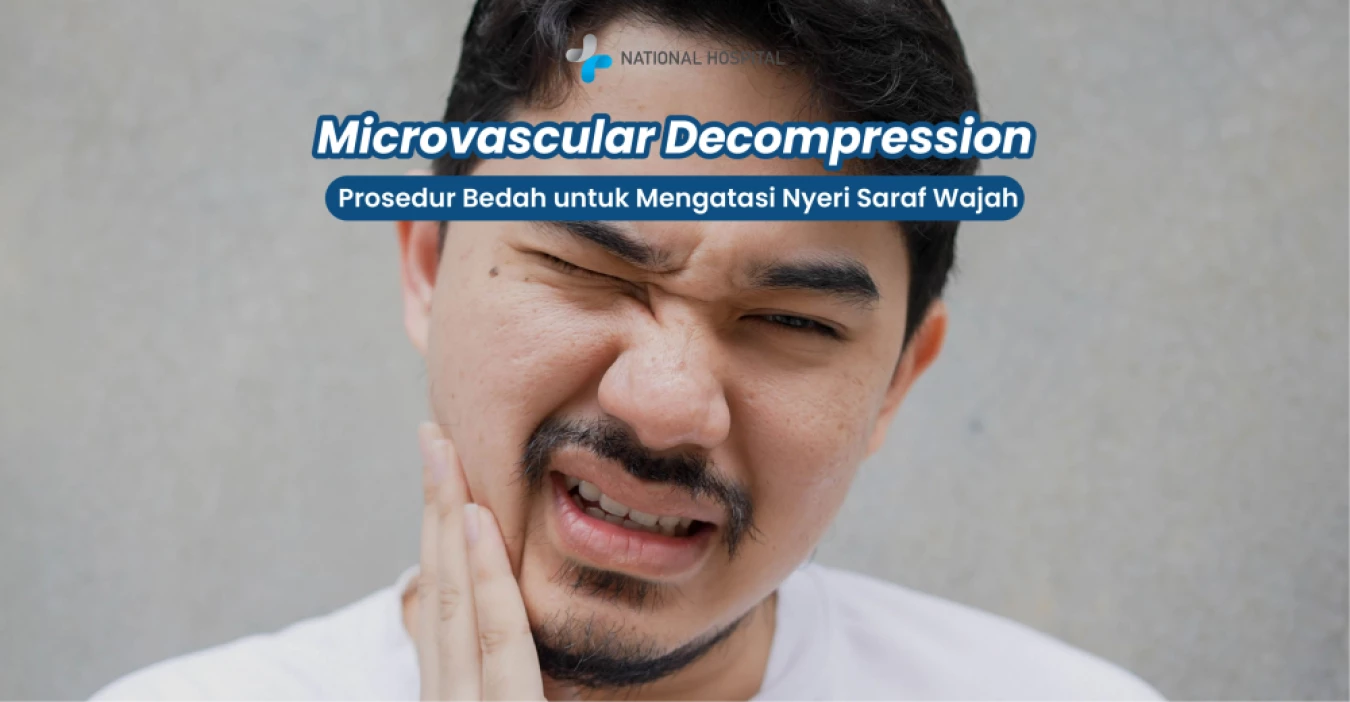
Facial pain that feels like an electric shock, a sharp stabbing sensation, or is accompanied by twitching on one side of the face can significantly interfere with daily activities. In some cases, these symptoms are caused by a blood vessel compressing a cranial nerve near the brainstem. When medications no longer provide optimal relief, a doctor may recommend Microvascular Decompression (MVD) as a treatment option.
Unlike therapies that only help relieve symptoms, Microvascular Decompression (MVD) aims to eliminate the underlying cause of the condition, namely the pressure exerted by a blood vessel on the nerve. As a result, this procedure can provide long-term symptom relief while preserving nerve function.
Microvascular Decompression (MVD) is a neurosurgical procedure performed to separate a blood vessel that is compressing a cranial nerve as it exits the brainstem.
Continuous compression can disrupt nerve function, leading to severe pain, facial muscle twitching, and other neurological disorders. During this procedure, the surgeon carefully repositions the blood vessel away from the affected nerve and places a special cushion or spacer between them to prevent the blood vessel from compressing the nerve again.
Because the underlying source of the compression is removed without damaging the nerve, Microvascular Decompression (MVD) is considered one of the surgical procedures with a high success rate in appropriately selected patients.
Microvascular Decompression (MVD) is commonly performed to treat disorders caused by compression of the cranial nerves, such as trigeminal neuralgia, hemifacial spasm, geniculate neuralgia, and glossopharyngeal neuralgia.
Microvascular Decompression (MVD) is performed under general anesthesia, allowing the patient to remain asleep throughout the procedure and experience no pain.
After undergoing Microvascular Decompression (MVD), patients generally stay in the hospital for 1–2 days for monitoring and to detect any possible complications.
Compared with other treatment options, Microvascular Decompression (MVD) offers several advantages, including:
- Addresses the underlying cause of nerve compression rather than simply relieving symptoms.
- Does not damage the affected nerve.
- Provides the potential for long-term pain relief in appropriately selected patients.
- May help reduce or eliminate the need for medication in some patients.
- Preserves facial sensory function because the nerve is not destroyed during the procedure.
National Hospital is supported by experienced neurosurgeons who perform Microvascular Decompression (MVD) to treat various cranial nerve disorders, including Trigeminal Neuralgia, Hemifacial Spasm, Geniculate Neuralgia, and Glossopharyngeal Neuralgia.
With advanced surgical technology and an experienced medical team, National Hospital has treated thousands of patients undergoing Microvascular Decompression (MVD). This experience is supported by comprehensive evaluations and individualized treatment plans tailored to each patient's condition, helping achieve optimal therapeutic outcomes.
If you experience recurrent facial pain, twitching on one side of the face, or other symptoms suggestive of a cranial nerve disorder, do not hesitate to consult a neurosurgeon. Early diagnosis and appropriate treatment can help reduce symptoms, improve quality of life, and prevent the condition from progressing.






 info@national-hospital.com
 Suggestion
 Login
Login