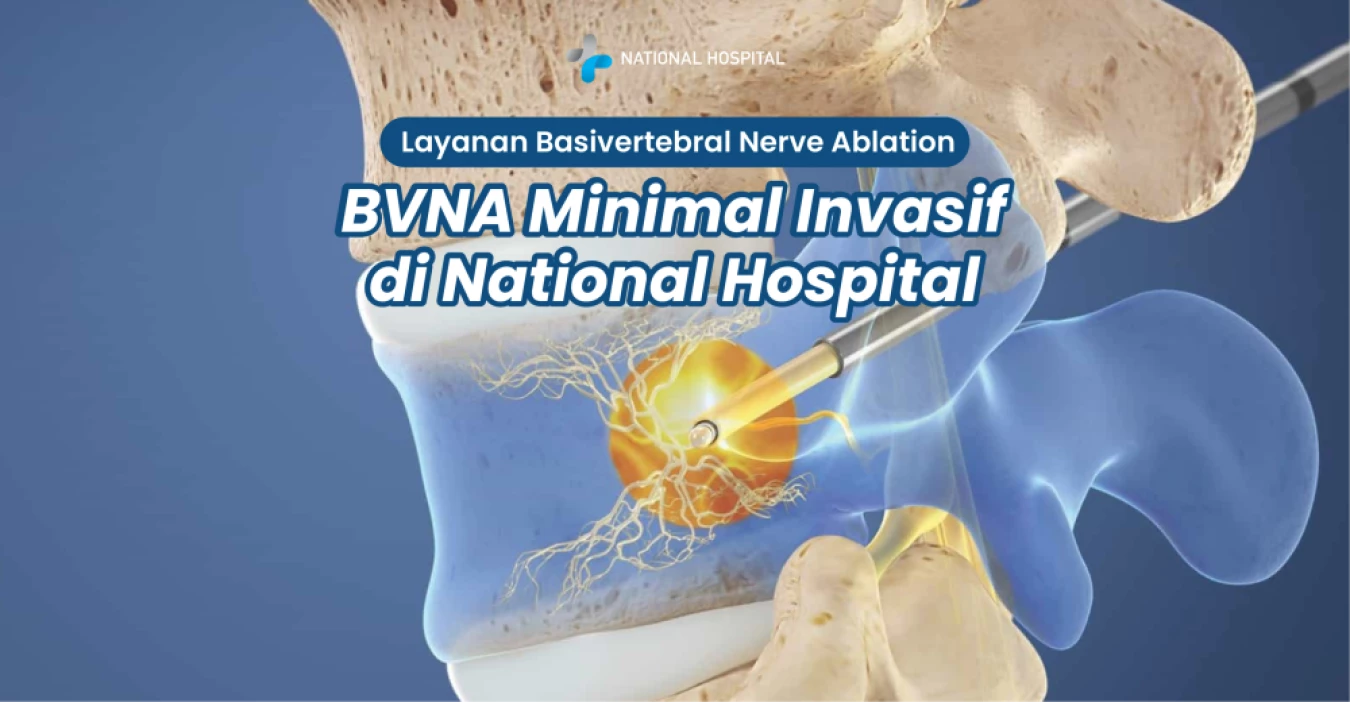
Chronic lower back pain is one of the most common conditions that can significantly affect a person’s quality of life. Persistent pain may limit daily activities, reduce productivity, and interfere with comfort during rest. In some patients, this pain originates from changes in the vertebral endplates, a condition known as vertebrogenic pain.
Within the spine lies a nerve called the Basivertebral Nerve (BVN). This nerve transmits pain signals from the vertebral endplates—the layers that separate the vertebral bones from the intervertebral discs—to the brain. When degenerative changes or inflammation occur in this area, the basivertebral nerve can become a pathway for pain transmission, leading to chronic lower back pain.
With advancements in medical technology, a procedure known as Basivertebral Nerve Ablation (BVNA) is now available. This minimally invasive treatment aims to reduce pain by disabling the basivertebral nerve’s ability to transmit pain signals.
Recently, National Hospital Neurosurgeon Dr. dr. Achmad Fahmi, Sp.BS(K) Subsp. N.F., FINPS., IFAANS performed a BVNA procedure on a patient suffering from chronic lower back pain caused by vertebrogenic pain. The procedure utilized radiofrequency technology specifically targeted at the basivertebral nerve within the spine.
In general, the procedure involves the following steps:
According to Dr. Achmad Fahmi, this procedure is performed using a highly targeted approach, allowing precise access to the treatment area through a minimally invasive pathway.
One of the key advantages of BVNA is that it does not require the implantation of permanent devices or hardware in the spine. Because the treatment is focused directly on the identified pain source, the risk of disrupting surrounding tissues and structures is relatively minimal. Additionally, the small incision size contributes to a faster recovery process.
After the procedure, patients are monitored by the medical team. In most cases, patients may be discharged on the same day (one-day care) or once their condition is deemed stable, eliminating the need for hospital admission. Pain improvement may begin to be noticeable within several weeks after the procedure, with results continuing to develop gradually over the following months.
Recovery is generally relatively short. Most patients can resume light activities within one to two days, while more strenuous activities should be reintroduced gradually according to their physician’s recommendations. Some patients may experience mild discomfort at the treatment site, which typically improves within a few days.
Before undergoing BVNA, each patient will receive a comprehensive evaluation to confirm that the pain originates from a vertebrogenic source and that they are an appropriate candidate for the procedure. Treatment decisions are based on clinical symptoms, physical examination findings, and supporting imaging studies such as MRI.
If you are experiencing chronic lower back pain that does not improve, do not hesitate to consult a physician. Appropriate treatment can help reduce pain and improve quality of life. Through the National Hospital Neuroscience Center (NHNC), National Hospital provides neurosurgical and minimally invasive treatment services supported by experienced medical professionals and advanced technology to deliver personalized care for every patient.






 info@national-hospital.com
 Suggestion
 Login
Login