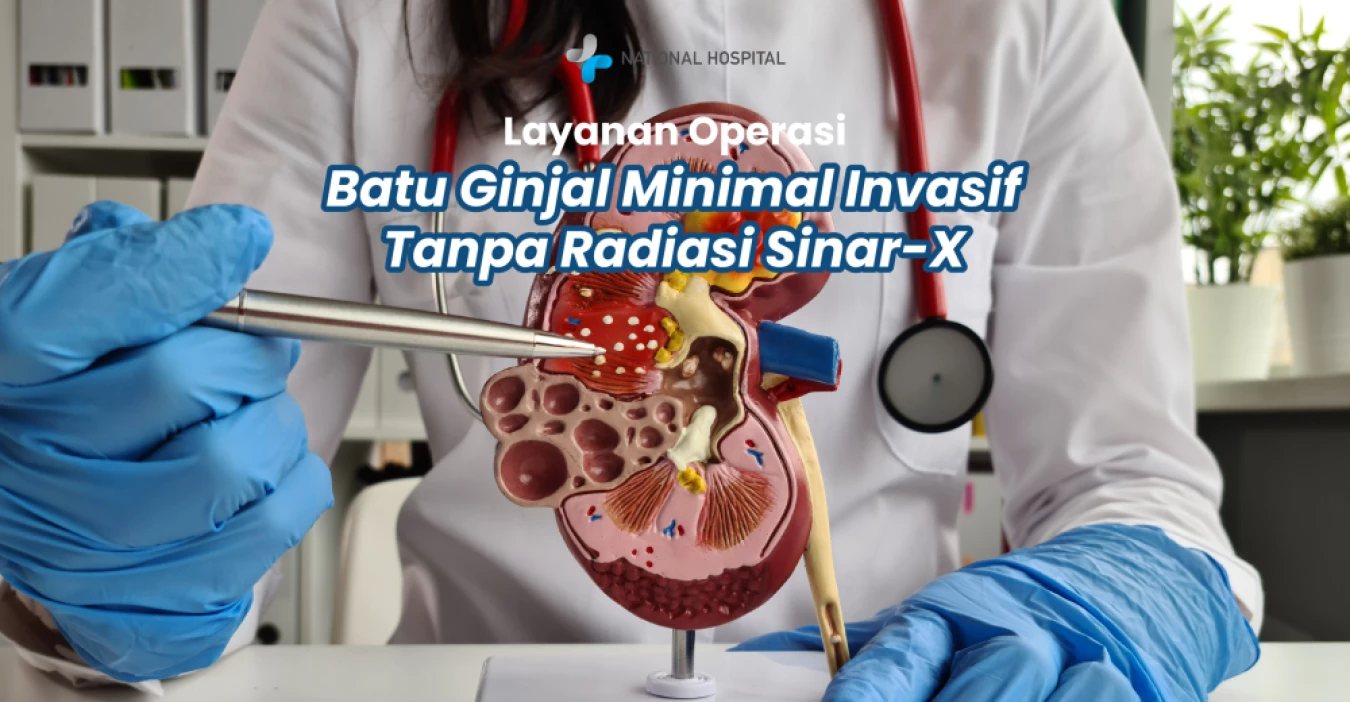
Kidney stone disease, medically known as nephrolithiasis, is a condition in which hard, stone-like deposits form within the kidneys. These stones can develop anywhere along the urinary tract, including the kidneys, ureters, bladder, and urethra.
This condition often causes severe pain in the lower back, abdomen, or groin, as well as discomfort during urination. It occurs when urine contains high levels of crystal-forming substances such as calcium, oxalate, and uric acid, making them difficult to dissolve in urine.
Over time, these minerals and salts crystallize and bind together to form stones. Several factors can contribute to kidney stone formation, including inadequate fluid intake, excessive consumption of high-sodium foods, a diet rich in oxalate-containing foods (such as spinach, nuts, and chocolate), obesity, family history, and certain metabolic or digestive disorders.
Dr. Dimas Panca Andhika, Sp.U., M.Ked. Klin, explained that advances in medical technology now allow kidney stones to be treated using more modern, precise, and minimally invasive techniques. One such procedure is Fluoroless Mini Percutaneous Nephrolithotomy (Mini PCNL), which offers reduced bleeding and postoperative pain.
"The procedure we perform is Fluoroless Mini PCNL. Compared to standard PCNL, Mini PCNL uses a smaller access tract to remove kidney stones. The stones are first fragmented and then removed using a suction system. With Mini PCNL, we expect a smaller incision and minimal bleeding," said Dr. Dimas Panca Andhika.
He further added: "This latest technique aims to achieve a high stone-free rate while minimizing postoperative pain for patients. Despite being less invasive, it provides stone clearance outcomes that are nearly comparable to those of standard PCNL, allowing effective removal of kidney stones."
The Fluoroless Mini PCNL procedure requires only a very small incision (approximately 1 cm) and is performed without the use of X-ray radiation (fluoroscopy). By utilizing safer and more accurate imaging technology, this approach helps reduce radiation exposure for both patients and healthcare professionals.
The procedure is performed under real-time ultrasound (USG) guidance, allowing the surgeon to visualize the stone and kidney structures directly and accurately throughout the operation. A miniature camera and stone fragmentation device are inserted through the small incision to access and remove the kidney stones.
At National Hospital, patients are supported by an experienced team of urologic surgeons and advanced diagnostic technology to accurately identify the cause of their symptoms. If you experience persistent lower back pain or urinary problems, do not ignore these warning signs. Consult our specialists promptly to receive the appropriate diagnosis and treatment.






 info@national-hospital.com
 Suggestion
 Login
Login