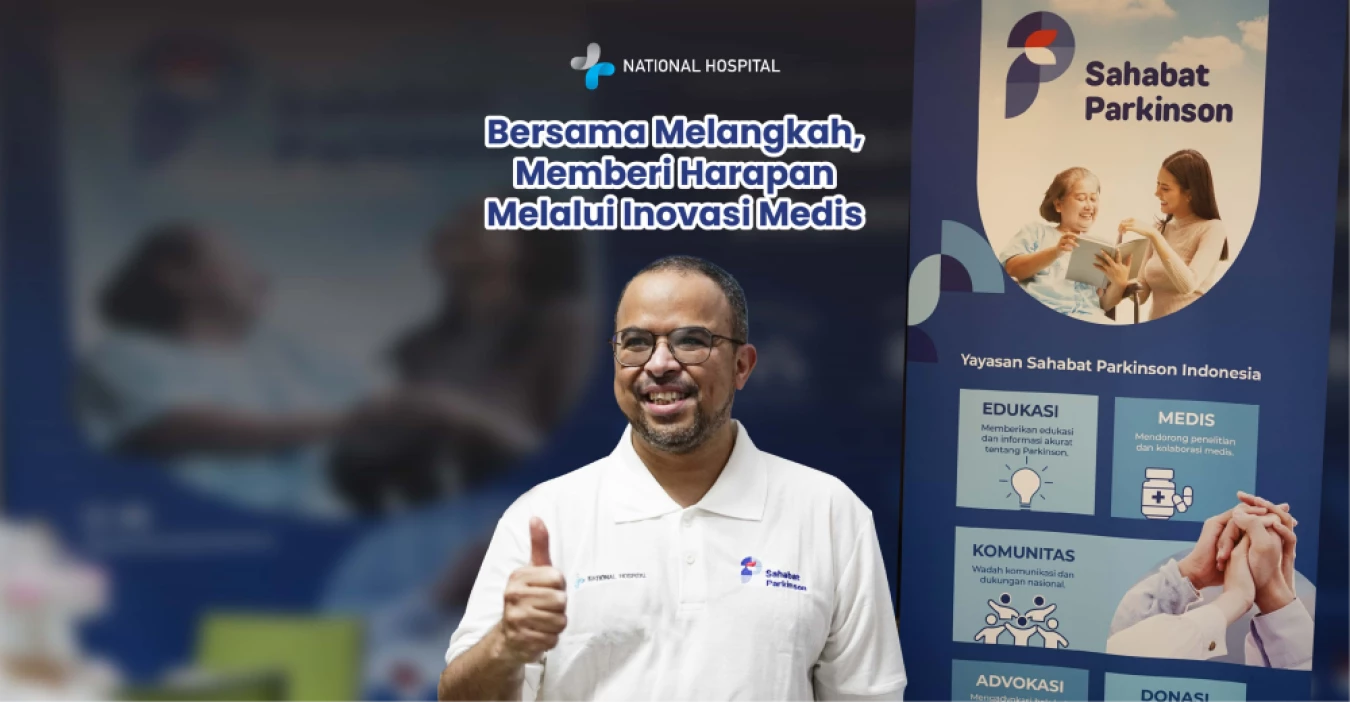
Parkinson’s Is Not the End — It’s a Meaningful Journey
Since 2012, National Hospital has been providing Parkinson’s treatment services together with Dr. Achmad Fahmi, SpBS, Subsp. NF, FINPS, IFAANS, a Neuro Functional Surgeon at the National Hospital Neuroscience Center.
In 2013, National Hospital and Dr. Fahmi—affectionately called Dr. Fahmi—received a record from the Indonesian Museum of Records (MURI) for making Surabaya the first city in Indonesia to perform Parkinson’s surgery.
Parkinson’s is not the end of a person’s journey. There is a flame of hope that we keep alive together.
That is why National Hospital is committed to continuously supporting Parkinson’s survivors.
National Hospital collaborates with Sahabat Parkinson Indonesia to bring strength and compassion to every survivor.
Together, we walk forward to keep hope alive!
Parkinson’s disease is mainly diagnosed through clinical examination, not through laboratory tests.
Doctors often use the acronym TRAP to recognize the four main symptoms:
If symptoms improve temporarily after taking the medication, it can be a strong indication of Parkinson’s.
Additional tests such as brain MRI are usually done to rule out other conditions similar to Parkinson’s, such as hydrocephalus, brain bleeding, or brain atrophy.
Unfortunately, because the exact cause is still unclear, there is no proven way to prevent Parkinson’s at this time.
However, several factors are thought to be linked to it, including head trauma, exposure to chemicals, aging, and genetic factors.
Not all Parkinson’s patients need surgery.
Surgery is usually considered when:
It’s important to note that surgery does not cure Parkinson’s, but it can help reduce symptoms and improve comfort and quality of life.






 info@national-hospital.com
 Suggestion
 Login
Login