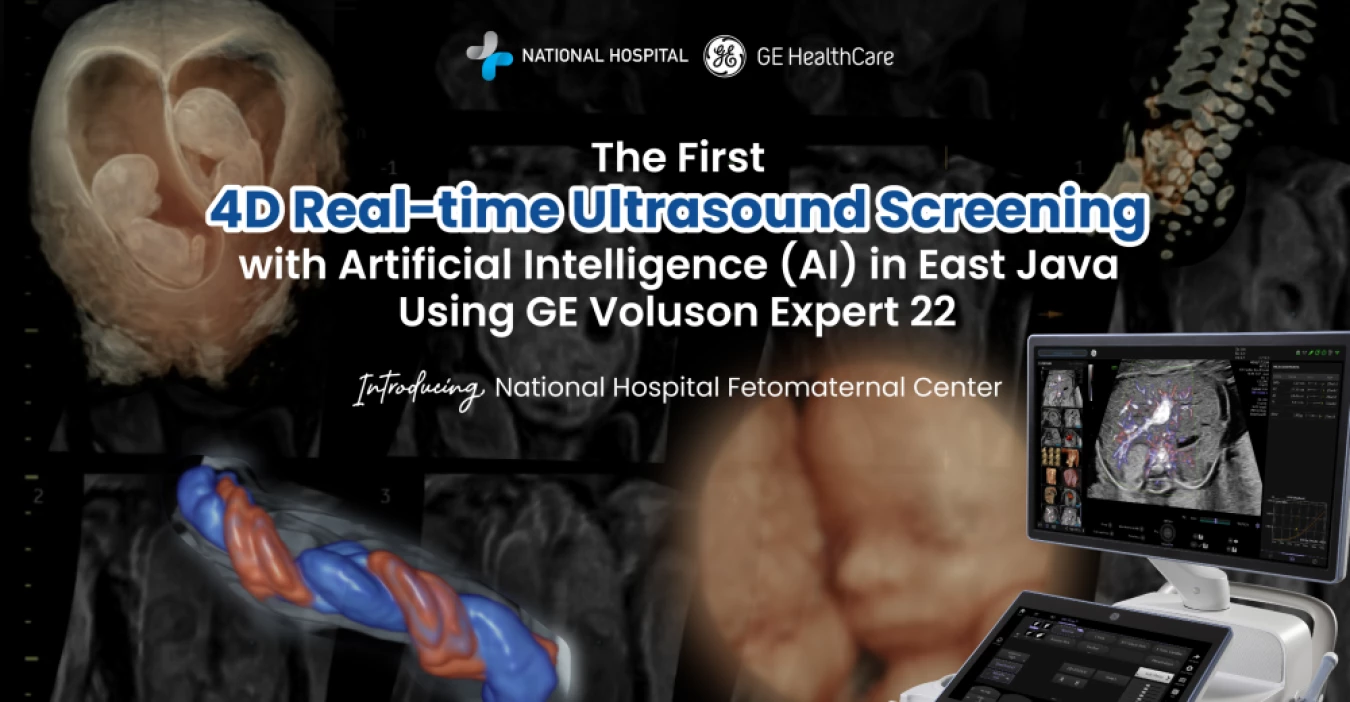
First in East Java, National Hospital Launches Fetomaternal Ultrasound Service with Artificial Intelligence Technology
One way to monitor the development of the fetus and to detect any issues during pregnancy is through Ultrasonography or USG.
Now, there's a Fetomaternal USG that can be performed by parents to obtain more detailed examination results.
Fetomaternal USG is conducted by a fetomaternal subspecialist doctor and provides images similar to 4D USG. However, it's important to note that this fetomaternal examination is more comprehensive and detailed.
Fetomaternal USG includes screening for genetic abnormalities, organ formation problems, premature birth, and miscarriage risks.
Fetomaternal USG is necessary for pregnant women with high-risk pregnancies. However, this doesn't mean that those without high-risk pregnancies cannot undergo Fetomaternal USG examinations. High-risk pregnancies include twin pregnancies, pregnancies with Intrauterine Growth Restriction (IUGR) babies, and those with HIV/TORCH infections.
National Hospital introduces a new service, Fetomaternal USG, becoming the first hospital to offer advanced fetomaternal services. National Hospital's Fetomaternal USG is equipped with the Voluson Expert 22 ultrasound device.
The Voluson Expert 22 ultrasound device incorporates three technologies, aiding patients in obtaining faster USG results, clearer detection, and improved patient diagnosis.






 info@national-hospital.com
 Suggestion
 Login
Login