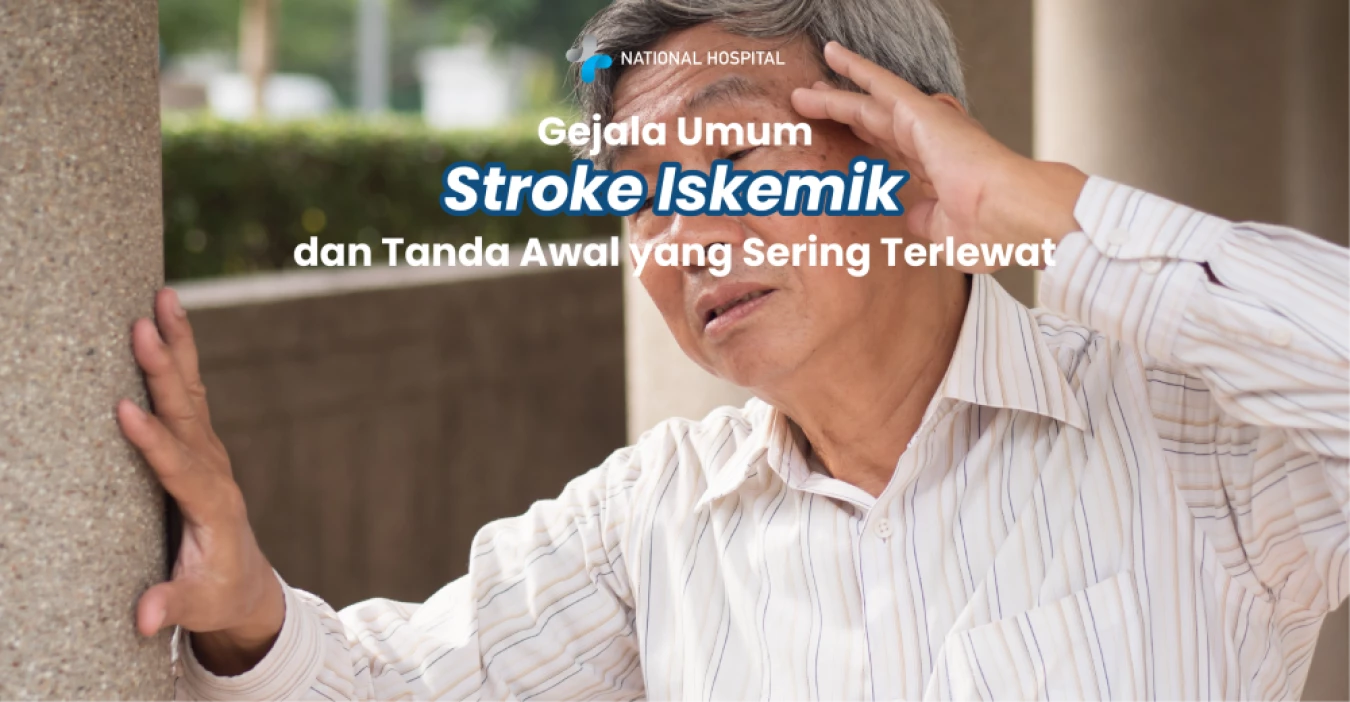
Stroke often comes without warning, yet the body actually gives certain signals that we often ignore. Understanding the symptoms of ischemic stroke early is a crucial step in preventing more severe consequences.
Ischemic stroke occurs when blood flow to the brain is blocked by a clot, causing the brain’s nerve cells to be deprived of enough oxygen. If not treated immediately, brain cells can die within minutes.
Therefore, recognizing the signs is not merely a matter of medical knowledge, but an effort to save your life and the lives of those closest to you.
Many people assume that stroke is always marked by sudden fainting. In fact, the symptoms often appear gradually or affect only certain parts of the body. Here are some warning signs you should watch out for:
One of the easiest hallmark signs to recognize is a change in the face. Try smiling in front of a mirror.
If one corner of the mouth cannot lift or appears droopy, this could be a strong sign of a neurological problem in the brain.
In addition to a crooked mouth, the eye on the same side may also appear droopy or have difficulty blinking normally.
Have you ever felt your hand suddenly become weak while holding a glass, or your leg feel heavy when taking a step? This weakness usually occurs on only one side of the body—either the left or the right side.
You can test this by raising both arms forward; if one arm slowly drifts downward on its own because it cannot hold the position, be alert, as this may be a symptom of ischemic stroke.
If you or someone around you suddenly speaks unclearly, sounds confused, or has difficulty finding the right words, do not take it lightly.
Damage to the brain’s speech center due to a blocked blood vessel can make it difficult for the patient to communicate normally even though they are fully conscious.
Vision that suddenly becomes blurry, double, or even completely lost in one or both eyes may be a sign of stroke.
Unlike common eye problems, vision loss caused by stroke happens suddenly and is not accompanied by pain in the eye area.
Severe dizziness that comes on suddenly, often accompanied by loss of body coordination, is a sign that is frequently overlooked.
The patient may feel as though the room is spinning or may have trouble walking upright without assistance. This happens because the part of the brain that controls balance begins to malfunction.
Time is the key in handling the symptoms of ischemic stroke. There is a term called the “Golden Hour” or golden period, which refers to the first few hours after symptoms appear, when brain damage can still be minimized if treatment is given immediately by medical experts.
Delaying examination will only increase the risk of permanent disability or paralysis.
If you or a family member experiences any of the signs above, we strongly recommend seeking immediate consultation with a neurologist and a neurosurgeon.
Our expert team is ready to help with a comprehensive evaluation, from brain imaging to emergency medical intervention to break up the blood clot.
Recognizing the symptoms of ischemic stroke early is a form of care for your future quality of life. Do not wait until the condition worsens. Early detection and proper treatment by a professional medical team can make a significant difference in your recovery process.
As a healthcare center that prioritizes advanced technology and patient comfort, National Hospital is equipped with complete facilities and experienced neurological specialists to manage various stroke cases comprehensively.
We are committed to providing the best care from the emergency phase through rehabilitation. Contact our healthcare services immediately to receive precise and appropriate neurological treatment for your long-term health.






 info@national-hospital.com
 Suggestion
 Login
Login