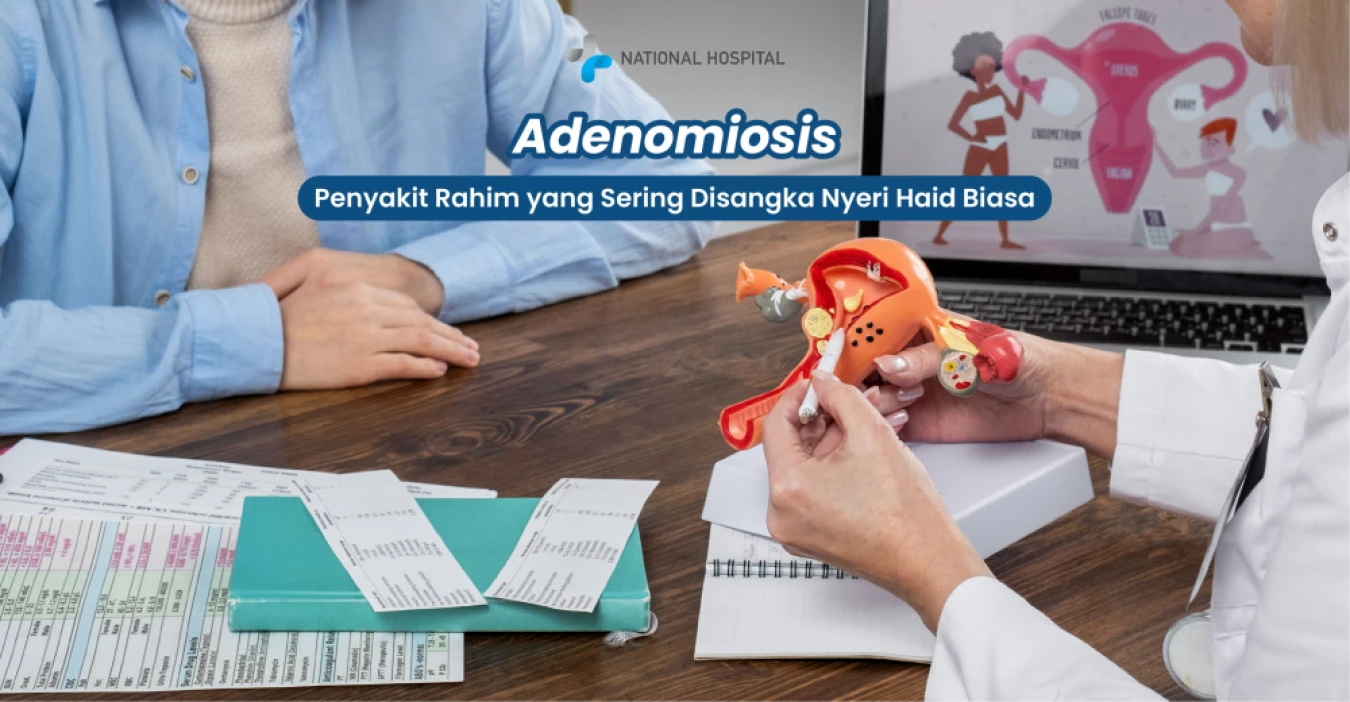
Many women consider progressively worsening menstrual pain or very heavy menstrual bleeding to be "normal." However, for some women, these symptoms may be a sign of adenomyosis, a uterine condition that is often diagnosed late because its symptoms resemble those of common menstrual disorders.
Although it is not cancer, adenomyosis can interfere with daily activities, cause anemia due to excessive bleeding, and significantly affect quality of life. The good news is that this condition can be diagnosed and treated through various therapeutic options based on the patient's age, symptom severity, and pregnancy plans.
Adenomyosis is a condition in which the tissue that normally lines the inside of the uterus (the endometrium) grows into the muscular layer of the uterus (the myometrium). As a result, during each menstrual cycle, this tissue also thickens, breaks down, and bleeds within the uterine muscle.
This condition can be compared to a house wall that is supposed to have paint only on its surface. In adenomyosis, however, the "paint layer" penetrates into the wall itself. Consequently, with each monthly hormonal change, the uterine wall becomes thicker, swollen, and painful.
Over time, the uterus may enlarge to two or three times its normal size. This condition often causes menstrual periods to become heavier, longer, and more painful than usual.
To date, the exact cause of adenomyosis remains unknown. However, researchers believe that the condition is associated with a combination of several factors, including:
Nevertheless, adenomyosis can also occur in women who have never undergone uterine surgery.
Not all women with adenomyosis experience symptoms. Approximately one-third of cases are asymptomatic and are only discovered during examinations performed for other reasons. However, when symptoms do occur, the most common complaints include:
Prolonged excessive bleeding can also lead to anemia. As a result, patients may experience fatigue, paleness, dizziness, weakness, palpitations, and difficulty concentrating.
During the initial consultation, the doctor will first take a detailed medical history, including the patient's symptoms, menstrual cycle, pain severity, and overall medical history. This is followed by a physical examination, including a pelvic examination. If adenomyosis is suspected, additional investigations will be performed to help establish the diagnosis. The most commonly used diagnostic tests include:
In the past, a definitive diagnosis of adenomyosis could only be confirmed by examining uterine tissue after hysterectomy (surgical removal of the uterus). However, today, the combination of clinical symptoms and imaging findings from ultrasound or MRI is often sufficient to establish the diagnosis in many cases without the need for surgery.
Treatment for adenomyosis depends on the patient's age, severity of symptoms, overall health condition, and whether the patient is still planning to become pregnant. Treatment options include:
Nonsteroidal anti-inflammatory drugs (NSAIDs), such as ibuprofen or naproxen, can help reduce menstrual pain in some patients. However, it should be noted that these medications only provide temporary relief while awaiting definitive treatment for adenomyosis, and therefore cannot be used as a long-term therapy for adenomyosis.
Hormonal therapy aims to help reduce bleeding and pain, for example through:
If heavy bleeding causes a decrease in hemoglobin levels, commonly known as anemia, the doctor may recommend iron supplements or other therapies depending on the severity of the anemia.
In cases where symptoms are severe and do not improve with medication, surgical procedures may be considered. Surgical treatment for adenomyosis varies greatly depending on the patient's condition, ranging from procedures to release adenomyosis-related adhesions involving surrounding organs (such as the intestines, bladder, and ovaries), removal of adenomyosis masses through adenomyosis resection — removing only the adenomyosis mass while preserving the uterus — to hysterectomy, which is the removal of the uterus. These procedures can be performed either through open surgery (laparotomy) or laparoscopic surgery.
Laparoscopy is a minimally invasive method that uses small incisions in the abdomen, through which a laparoscopic camera and laparoscopic surgical instruments are inserted to perform the procedure. With smaller incisions, postoperative pain responses can be minimized as much as possible. In laparoscopic surgery, the surgical field of view is also enhanced through high-definition technology, allowing for maximum surgical accuracy. Currently, laparoscopy is the preferred procedure for adenomyosis surgery, both in Indonesia and internationally.
The relationship between adenomyosis and fertility is still being studied. Several studies have shown that adenomyosis may reduce the chances of pregnancy or increase the risk of miscarriage in women.
However, many women with adenomyosis are still able to become pregnant naturally or with the assistance of reproductive technology. Therefore, if you experience difficulty becoming pregnant along with symptoms such as severe menstrual pain or prolonged menstrual bleeding, consult an obstetrician and gynecologist for further evaluation.
Adenomyosis is a benign uterine condition that occurs when the tissue lining the uterus grows into the uterine muscle. This condition can cause very heavy menstrual bleeding, severe menstrual pain, prolonged bleeding, and pelvic pain that interferes with daily activities.
Although the exact cause remains unknown and there is currently no proven way to prevent adenomyosis, advances in imaging technology have made it possible to diagnose adenomyosis earlier without requiring surgery. With appropriate treatment, most patients can control their symptoms and improve their quality of life.
If you experience symptoms suggestive of adenomyosis, do not delay seeking evaluation from an obstetrician and gynecologist so that diagnosis and treatment can be provided as early as possible. At National Hospital, adenomyosis can be managed by experienced obstetricians and gynecologists, including through minimally invasive laparoscopic procedures for cases requiring surgical treatment.
This laparoscopic procedure offers smaller incisions, less postoperative pain, and faster recovery time. Supported by modern facilities and a competent medical team, National Hospital is committed to providing safe, appropriate, and patient-centered care tailored to each individual's needs.






 info@national-hospital.com
 Suggestion
 Login
Login