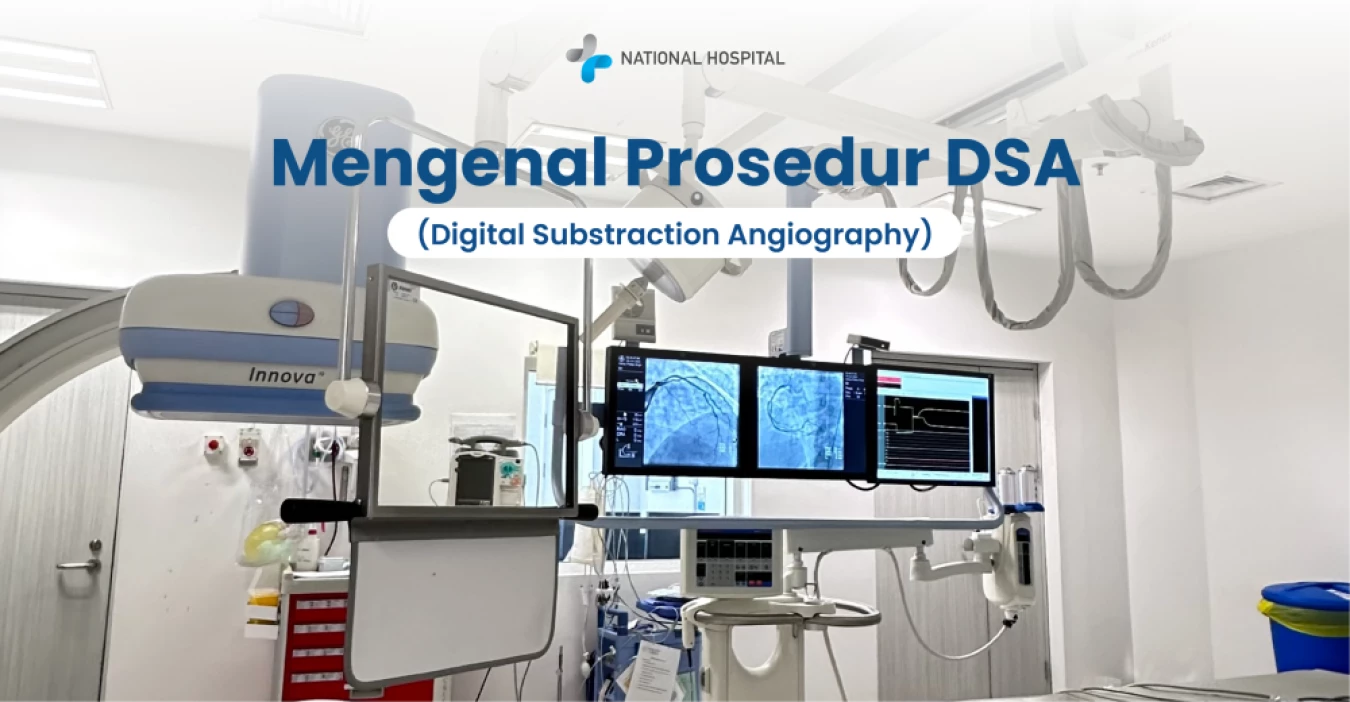
Digital Subtraction Angiography (DSA), also known as brain catheterization, is a medical imaging technique used to visualize blood vessels in great detail. This technology is often referred to as "brain washing" because of its ability to clear images of distracting structures, such as bones or tissues, making the blood vessels clearly visible.
In this article, we will discuss in depth about DSA brain catheterization, the methods used, and its uses in various specific diseases.
DSA is an imaging technique that utilizes X-rays to produce images of blood vessels. This procedure is carried out in a specialized room known as a catheterization lab or Cath Lab. The basic principle of DSA involves taking two images: one before and one after the administration of a contrast agent.
The contrast agent is a substance injected into the blood vessels through a catheter placed in the femoral artery to make the vessels more visible on X-ray images. Subsequently, a computer subtracts or removes the background images, so only the blood vessels are clearly seen. This process allows doctors to view the blood vessels in more detail and detect any narrowing, blockages, or other abnormalities.
The DSA brain catheterization procedure involves several steps as follows:
Fasting: The patient is asked to fast for several hours before the procedure.
Patients are given instructions about medications that should be temporarily stopped.
Patients are required to fill out a consent form after receiving a detailed explanation about the procedure.
A small catheter is inserted into the arterial blood vessel through a small puncture, usually in the groin area. This procedure is performed under local anesthesia to minimize patient discomfort.
The contrast agent is injected through the catheter into the blood vessels. At this point, several images are taken using an X-ray machine.
Images before and after the administration of the contrast agent are taken, and a computer processes these images to remove distracting structures, leaving only the blood vessels visible.
The doctor will analyze the DSA images to detect any issues in the blood vessels, such as narrowing, aneurysms, or arteriovenous malformations (AVMs).
DSA, or "brain washing," plays an important role in the diagnosis and management of various diseases involving brain blood vessels. Some conditions where DSA brain catheterization is particularly useful include:
Definition: Aneurysms are abnormal swellings or dilations of the blood vessel walls in the brain that resemble bumps.
DSA Role: DSA can detect aneurysms with high accuracy, helping doctors plan surgical or endovascular interventions needed to prevent aneurysm rupture, which can cause stroke or brain hemorrhage.
Definition: AVM is a condition where there is a direct connection between arteries and veins without passing through capillaries, potentially causing brain hemorrhage or seizures.
DSA Role: DSA helps map the structure of AVMs and determine the most appropriate therapy, such as embolization or surgery.
Definition: Narrowing of the carotid arteries can reduce blood flow to the brain, increasing the risk of stroke.
DSA Role: DSA can identify the degree and exact location of narrowing, crucial for determining whether the patient needs interventions like angioplasty or stenting.
Definition: CVST is the formation of blood clots in the major veins draining blood from the brain.
DSA Role: DSA can detect the presence of clots and help monitor the effectiveness of anticoagulant therapy.
Ischemic Stroke: In cases of acute ischemic stroke, DSA is used to assess blockages in major brain blood vessels and guide thrombectomy procedures, which mechanically remove blood clots.
DSA brain washing is advanced technology that plays a vital role in the diagnosis and management of various brain blood vessel diseases. With its ability to provide clear and detailed images, DSA helps doctors make more accurate and timely decisions. Despite some risks associated with this procedure, the benefits far outweigh them, making DSA an invaluable tool in the fields of neurology and vascular surgery. With continuous technological advancements, this method is expected to become even safer and more effective in helping treat patients with brain blood vessel disorders.






 info@national-hospital.com
 Suggestion
 Login
Login