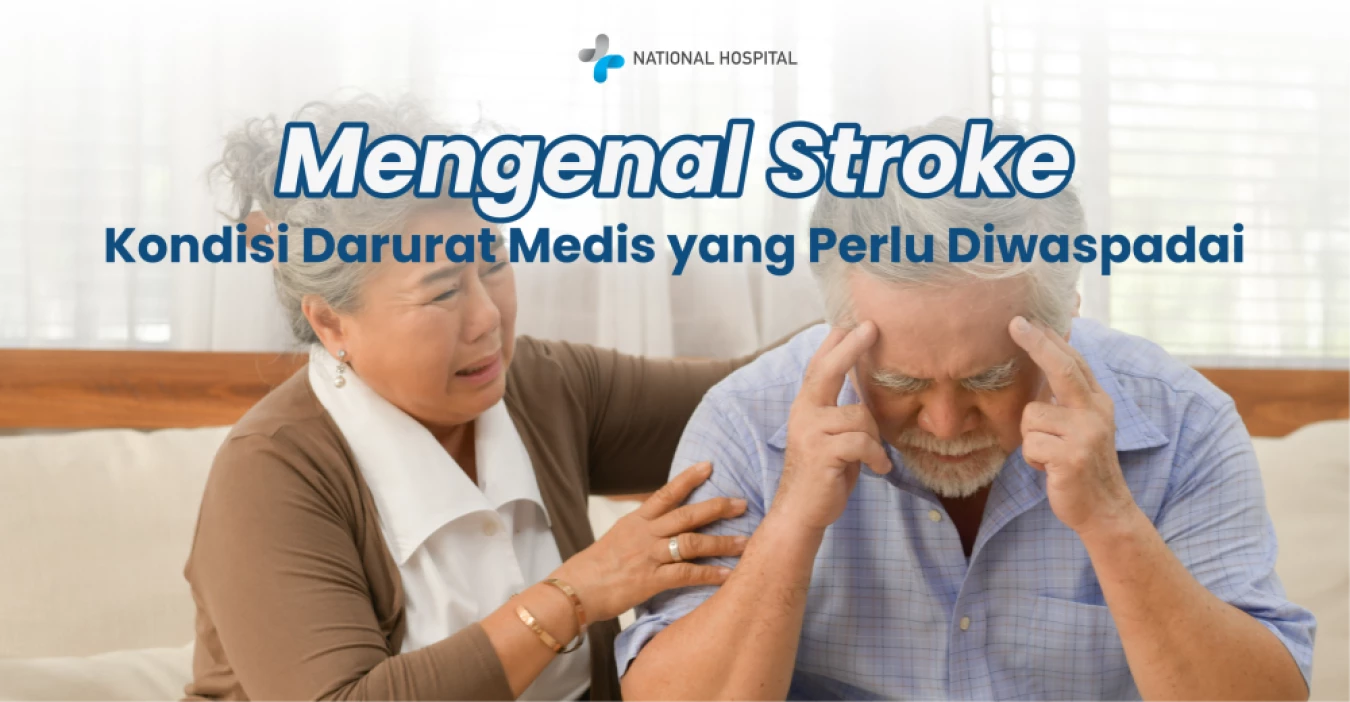
Stroke is a medical emergency that occurs when the blood flow to the brain is disrupted, either due to a blockage or a ruptured blood vessel.
This disruption can cause serious and potentially permanent brain function damage. Understanding what a stroke is, its symptoms, and the importance of fast prevention and treatment is crucial to saving lives and minimizing its harmful effects.
Recognizing stroke symptoms quickly is key. Remember the acronym "GET TO THE HOSPITAL" (translated from Indonesian “SEGERA KE RS”) to help you recall these critical warning signs:
Preventing a stroke is far better than treating one. Here are some proactive steps you can take:
Time is brain. Stroke symptoms have a “golden period,” a critical time window of no more than 4.5 hours from the onset of symptoms. During this window, medical treatment can be highly effective in preventing severe damage and long-term effects.
If you or someone nearby shows signs of a stroke, do not delay—go to the hospital immediately. The faster a stroke patient is treated, the lower the risk of disability and death.
Hospitals equipped with fast and accurate stroke response tools—such as Smart Ambulances with CCTV for live monitoring by doctors during the ride—can make a big difference in patient outcomes. Immediate action by a skilled medical team is absolutely crucial.Remember, awareness and fast action can make a significant difference in stroke outcomes. Educating yourself and those around you about the dangers and warning signs of stroke can save lives.






 info@national-hospital.com
 Suggestion
 Login
Login