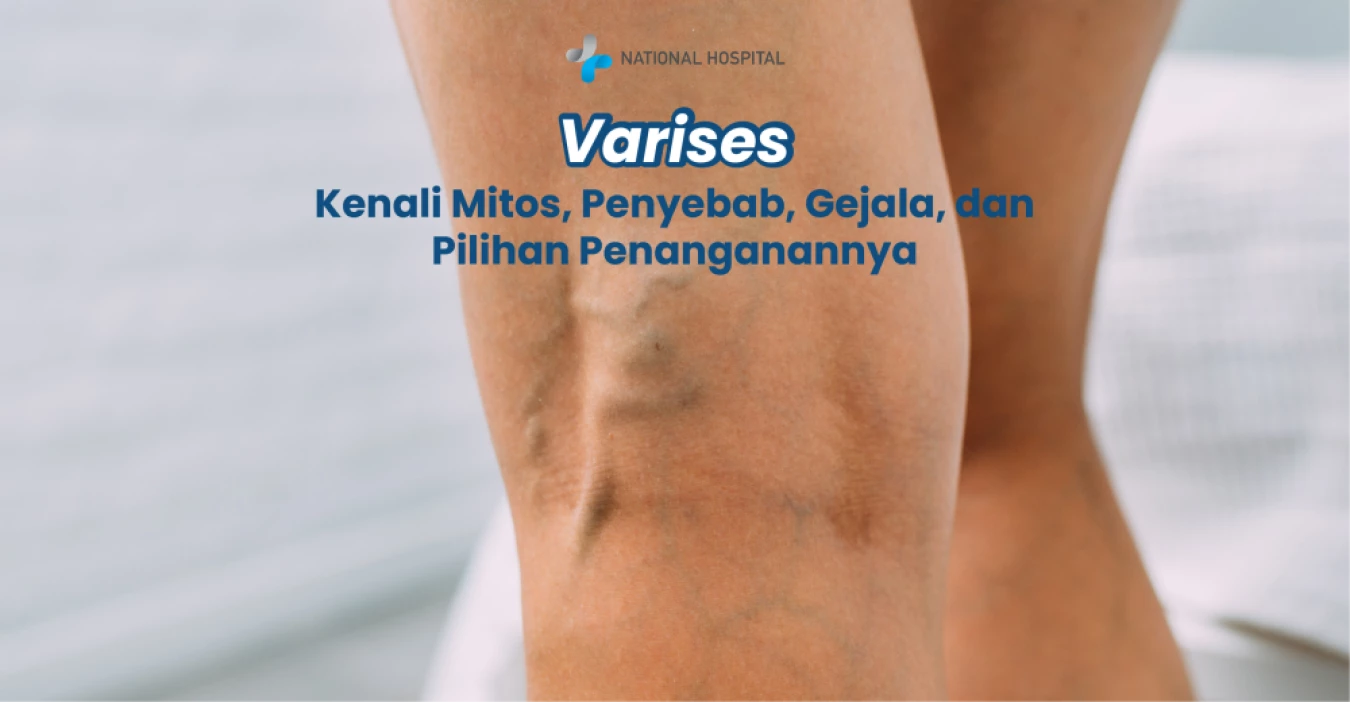
Varicose veins are often thought to be a condition that only affects women due to frequent use of high heels. However, this belief is not entirely true. Varicose veins can affect anyone, both women and men, and are generally not dangerous.
However, if left untreated, varicose veins can affect daily comfort and quality of life. In addition, there are still many myths and facts circulating about varicose veins. So, what are the risk factors and how are varicose veins treated? Read on to learn more.
Quoted from the National Hospital Surabaya YouTube podcast, dr. Robertus Dhany, Sp.B-TKV, a Thoracic and Cardiovascular Surgeon at National Hospital, stated that this myth is incorrect. In fact, varicose veins are also common among men, although they were previously more frequently diagnosed in women.
Dr. Robertus explained that research shows the current prevalence of varicose veins in men and women is actually not significantly different. However, women tend to seek treatment more often because varicose veins affect their appearance, while many men tend to ignore the condition.
"Actually, that's a myth. Research has shown that varicose veins can also occur in men. Globally, the percentage has traditionally been higher among women, but recent studies show that the numbers are now almost the same," explained dr. Robertus Dhany.
When wearing high heels, pressure distribution within the veins of the legs becomes less optimal. As a result, the legs become tired more quickly, and pressure inside the veins increases. For individuals who already have risk factors or existing varicose veins, this condition may aggravate their symptoms.
Many people assume that athletes or individuals who exercise regularly are more likely to develop varicose veins because the veins in their legs appear more prominent. In reality, enlarged veins in athletes are often a normal physiological response to increased muscle activity and do not necessarily indicate varicose veins.
Therefore, a medical examination is still necessary to determine whether the visible veins are varicose veins or simply a normal condition.
In general, varicose veins are not a life-threatening condition. However, if left untreated, they can cause various symptoms that interfere with daily activities, including:
In more severe cases, varicose veins can lead to skin discoloration and the development of wounds that are difficult to heal. These wounds are often mistaken for complications of diabetes, when in fact the underlying cause is venous disease.
Several factors may increase the risk of developing varicose veins, including:
Several measures may help reduce the risk of varicose veins, including:
Seek medical attention immediately if you experience symptoms such as:
The doctor will perform an evaluation through a physical examination and confirm the diagnosis using a vascular ultrasound (Doppler Ultrasound).
Treatment for varicose veins is tailored to the severity of the condition. In the early stages, treatment may include:
For more advanced cases, minimally invasive medical procedures are available, including:
Although varicose veins are not always dangerous, their symptoms should not be ignored. The earlier varicose veins are detected, the greater the opportunity to receive appropriate treatment using simpler methods before the condition progresses.
At National Hospital, comprehensive screening and treatment services for varicose veins are available according to the severity of the condition, ranging from conservative therapy and sclerotherapy to minimally invasive Endovenous Laser Ablation (EVLA). If you experience symptoms such as sore or heavy legs, swelling, or visibly enlarged veins, do not hesitate to consult a doctor to receive the appropriate diagnosis and treatment.






 info@national-hospital.com
 Suggestion
 Login
Login