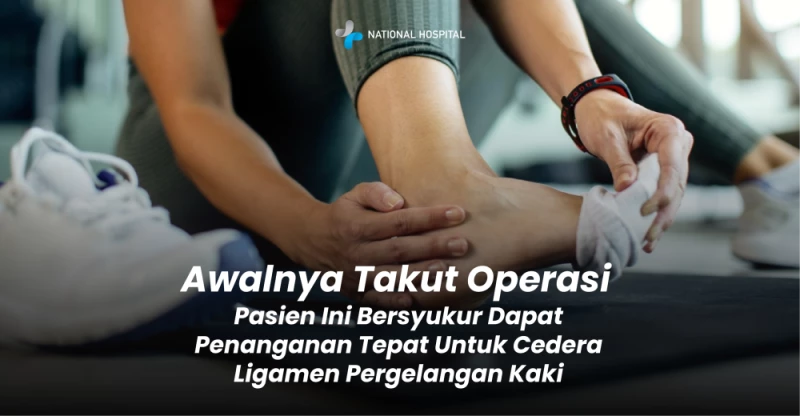
Experiencing an injury during daily activities is certainly something no one wants, especially when it results in the inability to walk. This was the experience of Ms. Yulia Budianto, a patient of dr. Henry Ricardo, an Orthopaedic & Traumatology Specialist and Foot & Ankle Consultant at National Hospital.The 39-year-old woman shared that the incident began after she fell at a hotel in Surabaya in early June. She immediately experienced severe pain accompanied by significant swelling in her ankle, making it difficult for her to stand and walk normally."At the beginning of June, I fell at a hotel in Surabaya. After that, my foot became swollen and inflamed. When I fell, I couldn't walk for about 10 minutes. Right after the fall, I think I needed around 10 minutes just to stand up, and then another 10 minutes before I could limp my way out. I went straight to the Emergency Department. From there, I was advised to undergo an X-ray and an MRI," said Ms. Yulia.The MRI results revealed a fairly serious ligament injury, including a partial tear of the ATTL ligament and a complete tear of the ATFL ligament. Following the diagnosis, she decided to consult dr. Henry Ricardo. During the initial consultation, dr. Henry performed a comprehensive evaluation of her injury.However, contrary to what the patient had expected, the decision to undergo surgery was not made immediately. Instead, dr. Henry recommended trying conservative treatment with physiotherapy first. This approach actually gave the patient peace of mind.What impressed the patient the most was dr. Henry's careful approach and his decision not to rush into surgery. Before meeting dr. Henry, she had sought opinions from several other doctors, including specialists outside the city, and nearly all of them recommended immediate surgery. Her experience with dr. Henry, however, was different."Honestly, I was afraid of surgery. My relatives had also asked orthopedic surgeons they knew, even those outside the city, and all of them said the same thing: have surgery immediately. Dr. Henry was the only doctor who said I didn't need surgery right away. He wanted to see first whether physiotherapy could restore the function of my foot. If it wasn't possible, then we would proceed with surgery," she continued.After undergoing physiotherapy for approximately two weeks, the patient returned for another consultation. At that time, she also had travel plans scheduled for the end of September. Based on the progress of her condition and her upcoming activities, surgery was ultimately determined to be the best treatment option.By the time she underwent surgery, the patient felt well prepared. Nevertheless, the procedure took longer than initially expected. Dr. Henry had previously explained that while the MRI could identify the presence of ligament tears, the full extent of the damage could only be determined during the operation itself."Initially, the surgery was expected to take about two hours. However, it turned out that the tear had spread, requiring a more complex procedure. He explained everything in great detail. Because the tear was extensive, the damaged tissue had to be repaired and additional tissue was used so the ligament could be reattached. That's what made the surgery take longer," Ms. Yulia explained.For the patient, the doctor's clear and open communication was one of the most memorable aspects of her treatment journey. His thoughtful approach, transparent communication, and consideration of her condition and personal needs were the reasons she felt confident undergoing the entire course of treatment at National Hospital."I had never been hospitalized before, so I was quite scared. But after going through the whole process, I feel grateful because I received the right treatment and excellent care," Ms. Yulia concluded.In addition to being satisfied with the medical treatment she received, the patient also expressed her appreciation for the services provided throughout her stay at National Hospital. According to her, the nursing staff were always attentive, responsive, and friendly in assisting with every need. Beyond the medical care, she also felt comfortable with the hospital's facilities, including the meals served during her hospitalization, which she found delicious and unlike those at other hospitals.
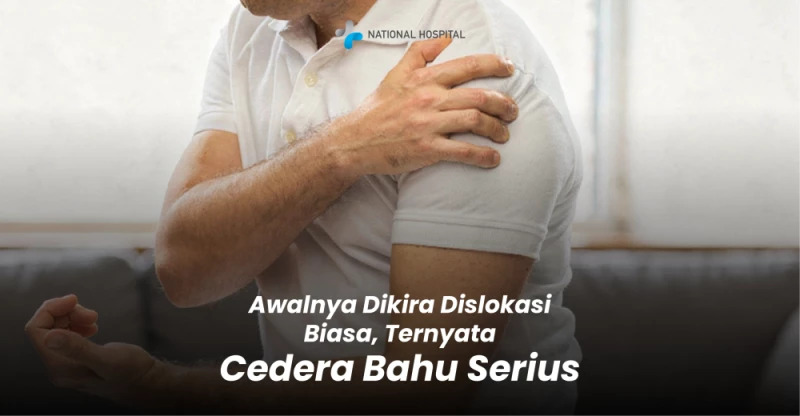
Who would have thought that a serious shoulder injury could occur without any pain? This is exactly what happened to Mr. Eduard, who only realized there was a serious problem with his shoulder several days after he fell while he was in China.Initially, Mr. Eduard was involved in an accident that caused his shoulder to make a "crack" sound. Despite this, he did not feel any pain at all and was still able to carry out his daily activities as usual. However, a few days later, he found that he could no longer lift his arm normally."When I first came here, I wasn't in pain. I fell while I was in China, and when I fell, my shoulder made a 'crack' sound. But after that, there didn't seem to be any problem—I still felt strong. It wasn't until about 10 days later that I realized I couldn't lift my arm above my head anymore. It felt like a dislocation," said Mr. Eduard.As he began having difficulty raising his arm, he decided to seek medical attention at another hospital. An X-ray examination showed that his bones were still in good condition, with only a small fragment at the tip of the bone. However, the findings could not explain the limited range of motion he was experiencing.Following a recommendation from his insurance provider, Mr. Eduard then consulted Dr. Glen Purnomo, an orthopedic specialist at National Hospital. After undergoing additional X-rays and an MRI, Dr. Glen referred him to Dr. Pramono, who has expertise in treating shoulder injuries.During the initial consultation, Dr. Pramono found swelling in Mr. Eduard's shoulder and recommended ten sessions of laser therapy in preparation for surgery. "After the MRI, I was referred to Dr. Pramono. He saw that my shoulder was swollen, so I had to undergo 10 laser therapy sessions first. After that, the surgery was scheduled," he continued.Once the therapy sessions were completed, the surgery was scheduled. The procedure lasted approximately five hours. During the operation, it was discovered that the tendons and ligaments attached to the bone had been torn and needed to be surgically repaired.For Mr. Eduard, it was not only the medical treatment that gave him peace of mind, but also the way Dr. Pramono explained his condition in detail and in an easy-to-understand manner. "The doctor explained everything very well. He clearly explained what the problem was and what needed to be done. That made us feel at ease. The doctor was also very friendly. I'm very happy with him," Mr. Eduard concluded.At present, Mr. Eduard is doing much better but is still in the postoperative recovery phase. Physical therapy has not yet begun because the doctor wants to ensure that the repaired tissues heal properly before starting rehabilitation exercises.Mr. Eduard's experience serves as a reminder that shoulder injuries do not always cause pain. If you experience limited shoulder movement after an impact or a fall, a thorough medical evaluation is essential to determine the underlying cause. With an accurate diagnosis, appropriate treatment, and good communication between doctor and patient, the recovery process can be much more reassuring and offer an excellent chance for a successful outcome.
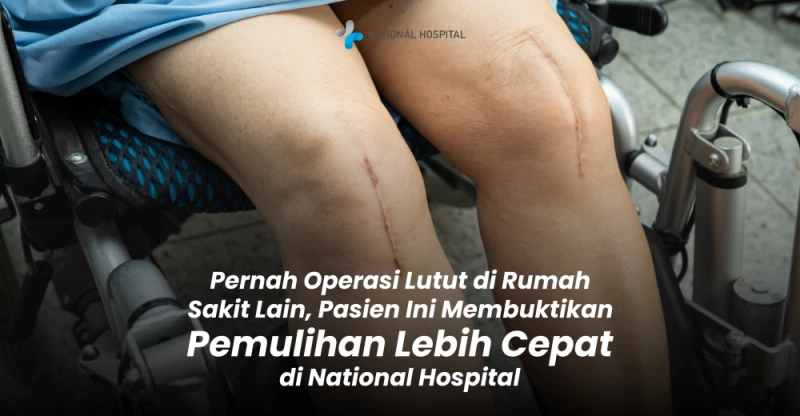
Total Knee Replacement (TKR) is a procedure that can help reduce pain and restore knee function in patients with severe joint damage. With advances in technology and modern surgical techniques, the focus of this procedure is no longer limited to a successful operation but also extends to patient comfort and faster postoperative recovery.One approach that is widely implemented today is Enhanced Recovery After Surgery (ERAS/ERACS), a series of evidence-based methods designed to help patients recover more quickly, reduce pain, and accelerate mobilization after surgery. With this approach, many patients are able to begin moving and practicing walking much sooner than with conventional methods.These benefits were experienced firsthand by a 69-year-old patient, Mrs. Jap Maat Lie, who underwent total knee replacement surgery at National Hospital. Interestingly, this was not her first knee operation. She had previously undergone the same procedure at another hospital, allowing her to directly compare both the surgical experience and the recovery process.According to Mrs. Jap, the most noticeable difference was the speed of recovery after surgery. While her previous operation required a considerable amount of time before she could walk normally again, this time she was already able to start walking on the very same day as the procedure."This one is much better. I had surgery in the morning, and by the afternoon they already encouraged me to walk—and it didn't hurt," said Mrs. Jap Maat Lie.Before the surgery, Mrs. Jap suffered from knee pain that significantly interfered with her daily activities. Although she was still able to walk, the discomfort made everyday tasks difficult. This condition ultimately led her to undergo surgery so she could regain her mobility and move more comfortably.In addition to her rapid recovery, Mrs. Jap also felt very comfortable throughout the surgical process. She said she did not feel anything during the operation because the anesthesia worked exceptionally well."The anesthesia was much more complete. I didn't feel anything at all. I entered the operating room, fell asleep, and only woke up when I was already in my hospital room," she added.This experience was very different from her previous surgery, which required a much longer recovery period. After her first operation, she had to wait quite some time before she could begin walking. Even then, she initially needed crutches, followed by a walking cane, before eventually being able to walk independently."Back then, the recovery took a long time. I couldn't walk right away. I had to use crutches first, then a cane, and only afterward could I walk on my own," Mrs. Jap explained.Although she recovered in about one month thanks to her determination and discipline in following rehabilitation therapy, the process still felt significantly longer compared to her most recent surgery.Before deciding to proceed with the operation, Mrs. Jap's family searched for information online and sought recommendations from friends. They came across numerous patient testimonials describing rapid recovery after surgery, which strengthened their confidence in choosing Dr. Glen Purnomo and National Hospital."We saw many testimonials from patients who had surgery one day and were able to go home the next. It turned out to be true," said Mrs. Jap's daughter.Not only were Mrs. Jap and her family satisfied with the surgical outcome, but they also highly appreciated the care they received throughout their stay at National Hospital. According to them, every aspect of the treatment—from the doctor's expertise to the attentiveness of the nursing staff—was excellent."We are satisfied with everything. Compared to our previous experience, the recovery was much faster, allowing her to return to normal daily activities sooner. We are also very satisfied with Dr. Glen and the nursing staff," Mrs. Jap concluded.For Mrs. Jap, this surgical experience has given her renewed hope and confidence that the right treatment combined with modern recovery protocols can help patients regain mobility more quickly and comfortably. The results she experienced not only relieved her knee pain but also enabled her to resume her daily activities with greater confidence.
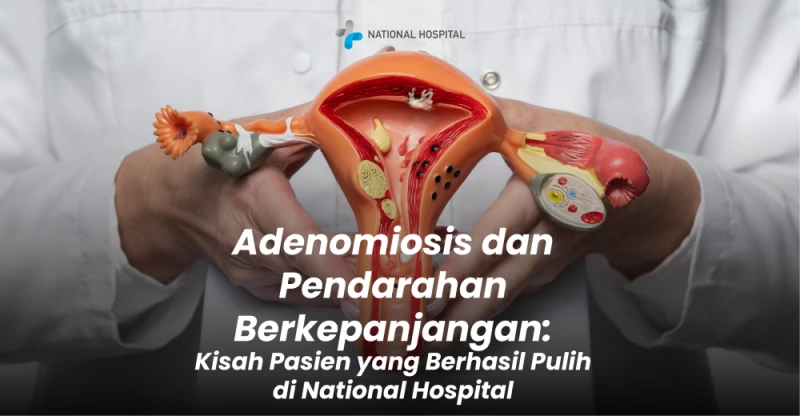
Persistent bleeding lasting more than one month is a condition that should not be ignored, as it can significantly affect a woman’s quality of life. This was experienced by a 53-year-old patient of National Hospital, Mrs. Jenny Winarto, who ultimately decided to undergo surgery after identifying the underlying cause of her symptoms.Initially, Mrs. Jenny assumed that the prolonged bleeding was a sign of menopause. Because of this, she chose to wait, expecting the condition to resolve on its own. However, over time, the bleeding did not stop and instead became increasingly concerning.At the time, she was planning to return to Papua. Before her departure, Mrs. Jenny decided to undergo a medical check-up to ensure her health condition. From the examination results, the doctor discovered a large uterine fibroid (myoma)."I had been bleeding for more than a month. At first, I thought it might be menopause, so I ignored it. But it didn’t stop, and eventually the examination showed that I had a large myoma," said Mrs. Jenny Winarto.According to the doctor’s explanation, her condition was associated with adenomyosis, a disorder in which endometrial tissue grows into the muscular wall of the uterus. This condition can cause heavier and prolonged menstrual bleeding than normal.The patient reported that this episode of bleeding was much heavier compared to what she had experienced before. After discussing treatment options with her doctor, she decided to proceed with surgery, which was successfully performed as planned.What brought her additional relief was the smooth and rapid recovery process. Mrs. Jenny expressed her surprise that she was already allowed to go home just one day after the procedure. After the surgery, she also reported feeling well with no further bleeding."Thank God, the surgery was performed at around 7:30 in the morning, and by the afternoon I was already able to go home. I feel fine now, there is no pain, and the bleeding has completely stopped," she added.In addition to her satisfaction with the medical outcome, Mrs. Jenny Winarto also expressed appreciation for the excellent care she received throughout her treatment. "The service was very good, and all the nurses were kind and attentive," she said.Now, after more than a month of distressing bleeding has been successfully resolved, she is able to return to her daily activities with greater comfort and peace of mind. Her experience serves as a reminder that prolonged abnormal bleeding should be evaluated early so that the underlying cause can be diagnosed and treated promptly.National Hospital is the first hospital in Eastern Indonesia to offer laparoscopic surgery supported by a state-of-the-art robotic system, the Edge Medical MP1000 Multi-port Endoscopic Surgical Robot System. This advanced technology is designed to significantly improve the precision and safety of surgical procedures.Robotic-assisted surgery can also reduce the risk of bleeding and complications, better preserve healthy tissues, and promote faster patient recovery. Supported by a team of highly skilled specialists, National Hospital is committed to ensuring optimal recovery outcomes. Do not hesitate to consult us for the best healthcare solutions for you and your family.
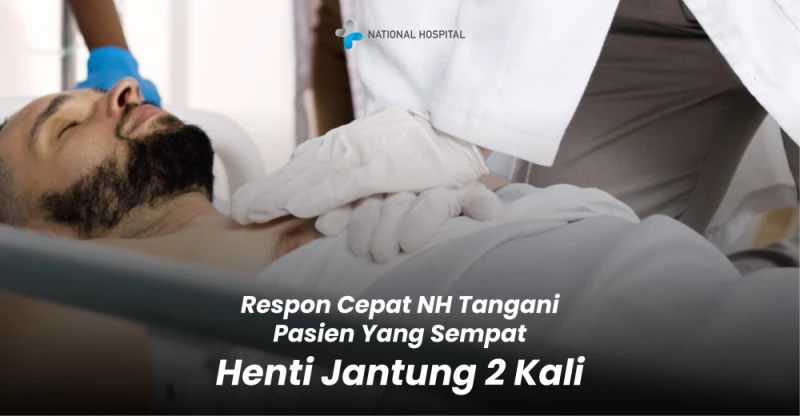
National Hospital recently treated a patient who suffered a heart attack and experienced cardiac arrest twice while in the Emergency Department (ED). The patient, identified as Mr. G, shared his experience during his recovery period in the hospital.The 47-year-old patient initially came to the hospital complaining of tingling and aching sensations in his left arm, accompanied by episodes of darkened vision. Upon arrival at the Emergency Department, Mr. G was immediately assessed and treated by the medical team. From the beginning, the emergency physicians suspected that he was experiencing a serious cardiac condition.As a result, the team promptly performed an electrocardiogram (ECG) and contacted Cardiologist and Interventional Cardiologist dr. Michael S. Kawilarang, Sp.JP, Subsp. KI (K), FIHA, FAPSC, FAsCC. Within approximately 30 minutes, Dr. Michael arrived at the hospital and recommended immediate coronary stent placement to restore blood flow to the heart."I lost consciousness twice, and the Emergency Department team responded very quickly. The cardiologist arrived and explained that I needed a stent immediately. The procedure was performed right away and took about one to one and a half hours. Thank God the operation went well. They even showed me the results before and after the stent placement," said Mr. G.Mr. G further explained that he was unaware he had experienced cardiac arrest twice. He only remembered his vision suddenly becoming dark. "Before the first cardiac arrest, I was given medication. Right after taking it, everything went blank. I don't remember anything after that because I lost consciousness," he recalled."Once I lost consciousness, I had no awareness of what happened. According to the Emergency Department staff, I collapsed twice. Even though they said I regained consciousness briefly after the second episode, I don't remember that at all. The only time I remember waking up was at the very end. During those few minutes, all I experienced was darkness—nothing else," he added.Fortunately, Mr. G's condition improved significantly after undergoing emergency coronary stent placement. He is currently recovering well, and the pain he previously experienced has gradually subsided. Mr. G expressed his gratitude for the rapid and coordinated response provided by the National Hospital Emergency Department team."My condition is much better now. I am very grateful that I received immediate treatment in the Emergency Department. They told me that if I had arrived later, the situation could have been fatal because I had already lost consciousness. Everything turned out well. Dr. Michael was very responsive, and the service at this hospital has been excellent. I truly appreciate how quickly the doctors and nurses acted when the emergency happened," Mr. G concluded.Regular consultations with a cardiologist are highly recommended to help detect heart problems early and reduce the risk of unexpected cardiac emergencies. If you experience symptoms such as chest discomfort, shortness of breath, unexplained fatigue, dizziness, or pain radiating to the arm, seek medical attention promptly.For residents of Surabaya and surrounding areas, National Hospital offers comprehensive cardiac care services supported by experienced heart specialists and advanced medical technology. From preventive screenings and diagnostic evaluations to emergency cardiac interventions and long-term heart care, National Hospital is committed to providing accurate diagnoses and personalized treatment plans to help protect your heart health. Don’t wait until symptoms become severe—entrust your cardiovascular care to National Hospital Surabaya.





 info@national-hospital.com
 Suggestion
 Login
Login