Cancer has long been regarded as a disease that primarily affects older adults. However, global trends show that this assumption is no longer entirely accurate. In recent years, several types of cancer have increasingly been diagnosed among adolescents and young adults.
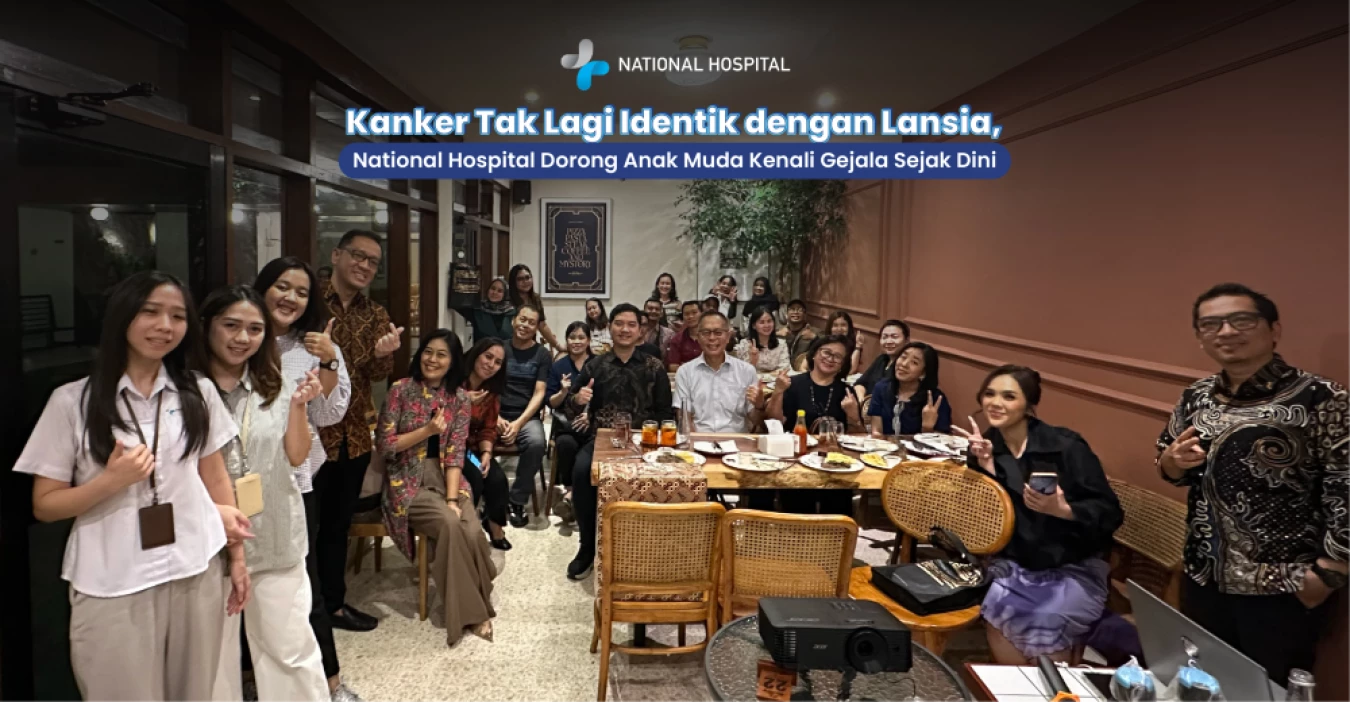
This situation has become a growing concern because many patients only become aware of their condition when it has already reached an advanced stage after ignoring its early symptoms. In response to this issue, National Hospital held a Health Talk entitled "Cancer in Young People: Recognize Early, Protect the Future."
During the event, National Hospital Internal Medicine Specialist dr. Jusak Renatan, Sp.PD explained that cancer can affect anyone, including those in their productive years. Adolescents aged 10–19 years and young adults aged 20–39 years remain at risk of developing various types of cancer, although the overall incidence is lower than in older age groups.
"We are currently seeing an increase in the diagnosis of several types of cancer among younger individuals. Therefore, the public needs to understand that being young does not mean being free from the risk of cancer. Recognizing the symptoms early is very important so that treatment can begin sooner and provide better outcomes," said dr. Jusak Renatan, Sp.PD.
According to dr. Jusak, several types of cancer are relatively more common among younger people, including breast cancer, cervical cancer, testicular cancer, lymphoma, leukemia, thyroid cancer, colorectal cancer, and melanoma. The types of cancer that occur may vary depending on age, gender, and geographic factors.
The risk of developing cancer is influenced by various factors. Some are non-modifiable, such as a family history of cancer, genetic mutations, and certain inherited conditions. However, many other risk factors can actually be controlled through lifestyle changes.
"Most cancer risk factors are related to daily habits. Smoking, alcohol consumption, obesity, physical inactivity, an unhealthy diet, excessive ultraviolet exposure, and certain infections such as HPV and Hepatitis B are factors that can increase a person's risk of developing cancer," he explained.
One of the greatest challenges in cancer management is that many early symptoms are often considered insignificant. In fact, some signs may indicate the need for further medical evaluation. Symptoms that should not be ignored include unexplained weight loss, changes in bowel or bladder habits, persistent fatigue, ongoing pain, the appearance of lumps or swelling, chronic cough or shortness of breath, unusual bleeding, and changes in moles or skin lesions.
According to dr. Jusak, one of the most important messages for the public is that cancer does not always produce symptoms in its early stages. Therefore, being aware of changes in the body and seeking medical attention promptly are key to improving treatment outcomes.
"Cancer is not just a disease of old age. The earlier it is detected, the greater the chance of successful treatment. Do not ignore persistent symptoms, adopt a healthy lifestyle, and undergo early screening if you have risk factors or concerning symptoms," concluded dr. Jusak Renatan.
In addition to maintaining a healthy lifestyle through a balanced diet, maintaining an ideal body weight, and exercising regularly, vaccination is also an important strategy in cancer prevention. The HPV vaccine has been proven to help prevent cervical cancer and anal cancer, while the Hepatitis B vaccine can prevent chronic hepatitis B infection, which carries the risk of developing into liver cancer.
National Hospital encourages the public to pay greater attention to their health, especially those in their productive years who often feel healthy and therefore neglect routine medical check-ups. Supported by experienced specialist physicians and comprehensive diagnostic facilities, National Hospital provides consultation, screening, diagnosis, and comprehensive cancer treatment services tailored to each patient's needs.






 info@national-hospital.com
 Suggestion
 Login
Login