Long-distance travel or sitting for extended periods of more than four hours often causes people to remain inactive with very little movement. This condition can increase the risk of developing Deep Vein Thrombosis (DVT), which is the formation of blood clots in the deep veins, particularly in the legs.
DVT is a condition that should not be taken lightly because the blood clot that forms can break loose and travel through the bloodstream to the lungs, potentially causing a pulmonary embolism, a life-threatening condition.
According to dr. Vici Heliyana Ernesta Tanggo, Sp.B, Subsp.BVE (K), Vascular and Endovascular Surgeon at National Hospital, the public should recognize the signs and symptoms of DVT, especially after activities that require the body to remain inactive for long periods.
"If someone frequently travels long distances or takes flights lasting more than four hours, do not ignore it if one of your legs suddenly becomes swollen. Sitting for prolonged periods can slow blood flow in the veins, thereby increasing the risk of blood clot formation or Deep Vein Thrombosis (DVT)," explained dr. Vici.
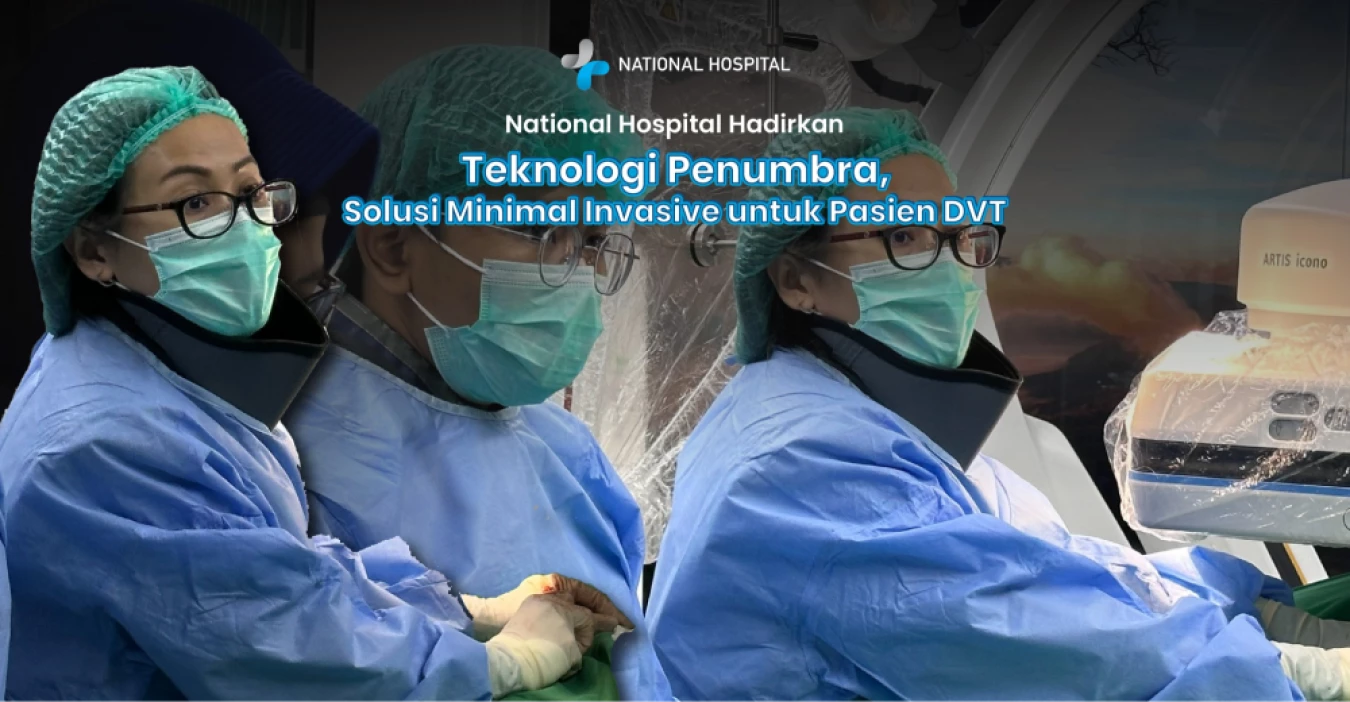
As part of its modern vascular services, National Hospital now provides aspiration thrombectomy using Penumbra technology for DVT patients with appropriate indications. This procedure is a minimally invasive endovascular treatment performed by inserting a catheter into the blood vessel to aspirate and remove the blood clot using a suction system.
"The procedure is performed by inserting a catheter through the blood vessel until it reaches the location of the blood clot. The clot is then aspirated using Penumbra technology. After that, an evaluation is performed using contrast, and if necessary, the blood vessel is dilated with a balloon to restore optimal blood flow," continued dr. Vici.
With appropriate patient selection, this procedure can help restore blood flow, reduce swelling, and lower the risk of long-term complications caused by DVT. One of the advantages of aspiration thrombectomy is its relatively faster recovery process compared to conventional procedures.
Compared to open surgery, aspiration thrombectomy offers a more minimally invasive approach with smaller procedural wounds. In addition, patients generally experience a relatively faster recovery.
"The advantages of this procedure are the minimal wound and the fast recovery process. In many cases, patients can go home the following day, or at most require about two days of hospitalization, depending on each patient's condition," explained dr. Vici.
However, this procedure still requires a comprehensive evaluation by a specialist to ensure that the patient receives the most appropriate treatment. Early detection and prompt management are essential steps in preventing serious complications caused by DVT.
With the support of modern technology such as aspiration thrombectomy using Penumbra, National Hospital remains committed to providing safe, effective vascular and endovascular services that are centered on patients' needs. Therefore, do not ignore changes in your body.
If you experience symptoms suggestive of DVT, such as swelling in one leg, pain, warmth, or changes in skin color accompanied by shortness of breath, consult a specialist immediately to receive the appropriate examination and treatment.






 info@national-hospital.com
 Suggestion
 Login
Login