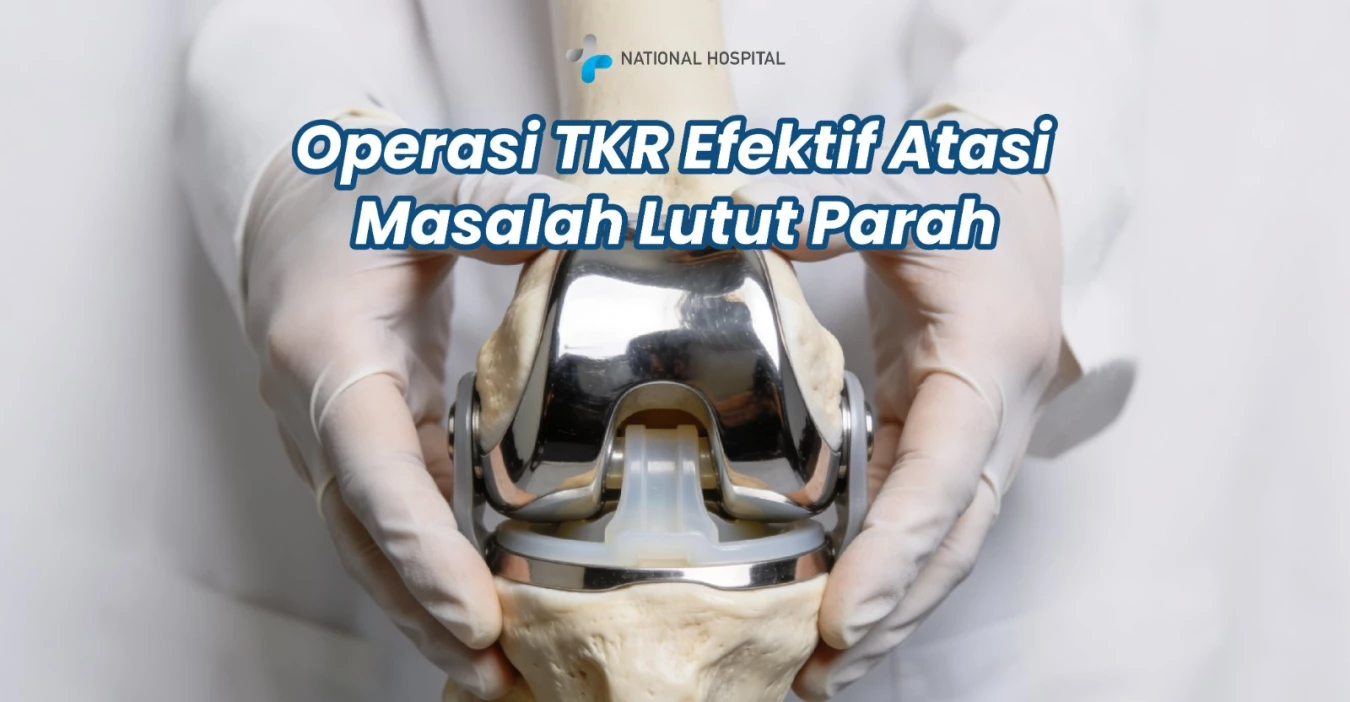
Total Knee Replacement (TKR) is a surgical procedure that replaces the damaged surfaces of the knee joint with artificial components (implants). The procedure aims to relieve pain and improve knee function. In everyday language, TKR is often referred to as knee cap replacement surgery, although the procedure involves replacing the damaged joint surfaces, not just the kneecap.
Knee pain caused by osteoarthritis can significantly affect quality of life. Everyday activities such as walking, climbing stairs, standing for long periods, exercising, and even sleeping can become difficult due to persistent pain. In the early stages, symptoms can usually be managed with lifestyle modifications, physiotherapy, medication, or knee injections.
However, when joint damage progresses and non-surgical treatments no longer provide adequate relief, knee replacement surgery may become an effective treatment option. Read on to learn more!
Knee replacement is a surgical procedure that replaces damaged knee joint surfaces caused by osteoarthritis or other forms of arthritis with specialized implants designed to relieve pain, improve knee function, and enhance patients’ quality of life.
Many people assume that knee replacement surgery always involves replacing the entire knee joint. However, not every patient requires total knee replacement. There are generally two types of knee replacement procedures:
Partial Knee Replacement (PKR), also known as Unicompartmental Knee Arthroplasty, is performed when damage is limited to one compartment of the knee. In this procedure, only the damaged part of the joint is replaced, while healthy bone, cartilage, and ligaments are preserved.
For appropriately selected patients, this procedure may offer faster recovery, more natural knee movement, and preservation of more of the patient's original joint structures.
Total Knee Replacement (TKR) is performed when joint damage is more extensive and affects more than one compartment of the knee. During this procedure, the damaged joint surfaces are replaced with specialized implants designed to restore knee function and relieve pain.
The choice between Partial Knee Replacement and Total Knee Replacement should be based on a comprehensive evaluation by an experienced orthopedic surgeon specializing in hip and knee conditions.
Knee replacement is one of the orthopedic procedures associated with high success and patient satisfaction rates in modern medicine. For appropriately selected patients, most experience:
Many patients who previously struggled to walk long distances, perform daily activities, or enjoy their hobbies may return to these activities more comfortably after surgery and appropriate rehabilitation.
Like any medical procedure, knee replacement surgery carries a risk of complications. However, it is generally considered safe when performed on appropriately evaluated patients by an experienced medical team. Potential complications include:
Fortunately, serious complications are relatively uncommon. Advances in surgical techniques, anesthesia, pain management, and modern recovery protocols have helped reduce complication risks and improve the patient experience after surgery.
Many patients still associate knee surgery with prolonged hospital stays and a difficult recovery period. In reality, the implementation of Enhanced Recovery After Surgery (ERAS) protocols has significantly changed the postoperative experience.
For many eligible patients without severe underlying medical conditions, sitting, standing, and walking can begin within hours after surgery. Some patients may even be discharged on the same day or the following day, provided their clinical condition allows it.
This approach aims to accelerate recovery, reduce complications, and help patients return to their daily activities sooner.
Enhanced Recovery After Surgery (ERAS) is an evidence-based approach designed to help patients recover faster after surgery.
According to Dr. Glen Purnomo, Sp.OT, Subsp.PL(K), FICS, Consultant Orthopaedic Hip and Knee Surgeon at National Hospital Surabaya, the success of modern knee surgery depends not only on surgical techniques but also on the entire care pathway before, during, and after surgery.
ERAS protocols include patient education, preoperative health optimization, multimodal pain management, tissue-sparing surgical techniques, and early mobilization after surgery. The goals are to reduce pain, lower the risk of complications, accelerate functional recovery, and help patients return to their daily activities sooner.
One of the biggest advances in modern knee replacement surgery is early mobilization. In the past, patients were often advised to remain in bed for extended periods after surgery. Today, most patients are encouraged to start moving as soon as it is safe to do so.
With an appropriate ERAS protocol, patients can generally begin sitting, standing, and walking with the assistance of a physiotherapist within a few hours after surgery. Early mobilization helps to:
Not necessarily. For patients who meet specific criteria and do not have severe underlying medical conditions, modern knee replacement surgery may allow discharge on the same day or the following day. The decision to discharge a patient depends on several factors, including:
However, patients with certain comorbidities or more complex medical conditions may require longer observation and hospitalization to ensure their safety and comfort throughout recovery.
Although patients may begin walking sooner after surgery, physiotherapy remains essential for long-term success. Rehabilitation aims to:
Recovery varies from person to person. However, many patients experience significant pain relief and improved quality of life within the first few weeks after surgery.
Advances in surgical techniques, pain management, anesthesia, and rehabilitation have transformed the knee replacement experience. With ERAS protocols, many patients can now stand and walk just hours after surgery and leave the hospital sooner than with conventional approaches.
Most importantly, every patient undergoes a comprehensive evaluation to determine whether they are a suitable candidate for a rapid recovery program. Patient safety remains the top priority at every stage of care.
If knee pain caused by osteoarthritis is beginning to limit your daily activities, consult the Hip & Knee Center team at National Hospital Surabaya to explore the treatment options best suited to your needs.







 info@national-hospital.com
 Suggestion
 Login
Login