ABUS stands for Automated Breast Ultrasound System, an automated breast ultrasound technology that uses a scanning system to produce three-dimensional (3D) images of breast tissue. This technology is designed as an additional examination for breast cancer screening, particularly in women with dense breast tissue.
Unlike conventional breast ultrasound, which uses a transducer moved manually by the operator, ABUS uses an automated scanning system to produce more standardized and consistent breast images. The examination produces a series of 3D images that can then be evaluated by a radiologist.
Invenia ABUS, developed by GE HealthCare, is one of the Automated Breast Ultrasound technologies designed for supplemental examinations in women with dense breasts. The FDA lists Invenia ABUS as an adjunct to mammography for breast cancer screening in certain populations with dense breast tissue.
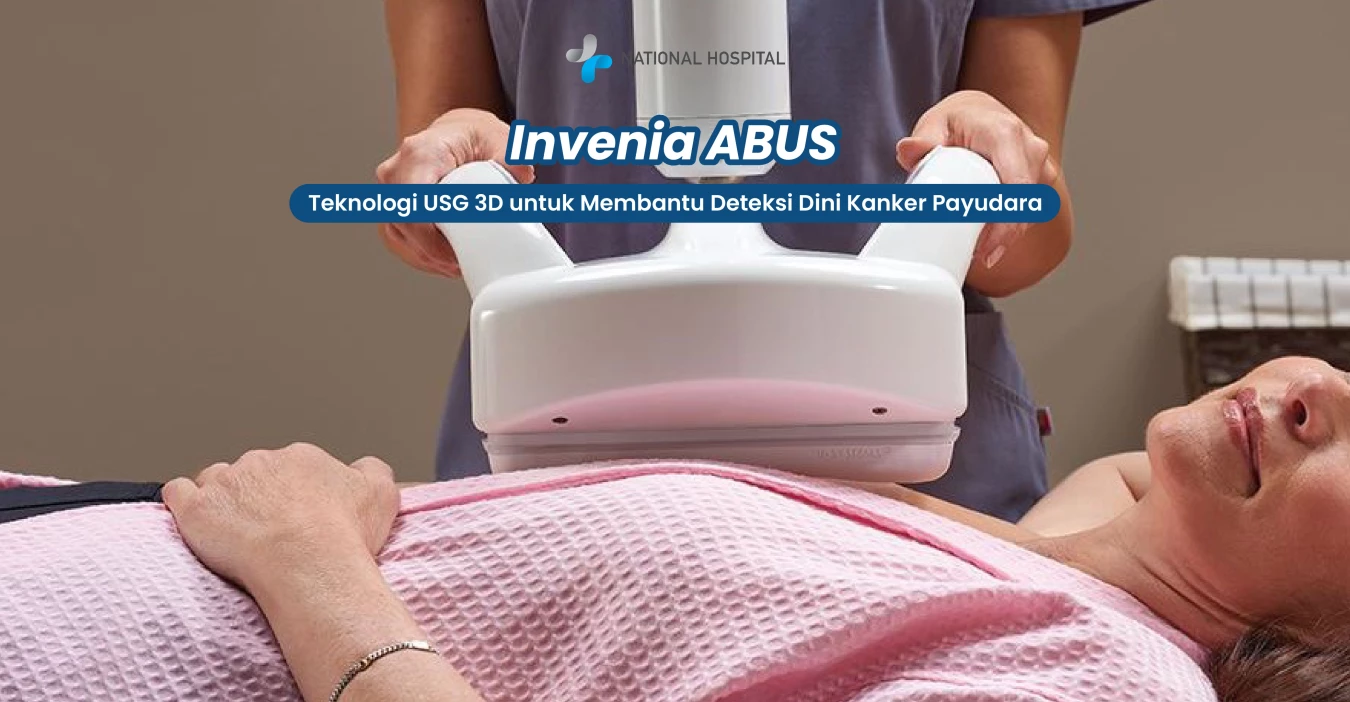
Invenia ABUS is a non-invasive procedure that does not use ionizing radiation. The patient is asked to lie down, and the breast is positioned for scanning using a specialized transducer. The ABUS system automatically scans the breast to generate a collection of 3D images of the breast tissue.
Because image acquisition is performed automatically using a standardized process, the examination can produce consistent images for review and analysis by a radiologist. Image acquisition with Invenia ABUS 2.0 can be completed in approximately 15 minutes. However, the total examination time may vary depending on the patient's condition and the workflow at the healthcare facility.
Invenia ABUS technology also includes artificial intelligence (AI)-based features that can assist with image acquisition and interpretation. Nevertheless, AI serves as a supporting tool and does not replace the physician. The examination results must still be evaluated by a radiologist, taking into account the patient's clinical condition and overall examination findings.
Several characteristics make Invenia ABUS an appealing option for supplemental breast examinations, including:
According to clinical data cited by GE HealthCare, the use of Invenia ABUS as a supplemental examination in women with dense breasts demonstrated a 35.7% increase in cancer detection compared with mammography alone. This figure is based on studies involving specific populations and examination conditions, so it should not be interpreted to mean that ABUS will increase cancer detection by the same amount in every individual.
Each breast examination method has its own advantages and limitations. One important factor to consider is breast density. Breasts are composed of fatty tissue, glandular tissue, and connective tissue. On mammograms, dense breast tissue appears white. Certain abnormalities, including breast cancer, may also appear white, making them more difficult to distinguish from dense breast tissue in some cases.
Therefore, for women with dense breasts, physicians may consider additional imaging examinations based on each patient's individual condition and risk factors. One option is Invenia ABUS (Automated Breast Ultrasound System), which uses automated ultrasound technology to produce 3D images of breast tissue.
It is important to understand that Invenia ABUS does not replace mammography. ABUS was developed as a supplemental screening examination alongside mammography for certain patient groups, particularly women with dense breast tissue. Mammography therefore continues to play an important role in breast cancer screening, while ABUS can provide additional information about breast tissue.
The choice of examination should be tailored to each patient's circumstances, including age, breast density, risk factors, medical history, the presence of symptoms, and the physician's recommendations. With an appropriate approach, different examination methods can complement one another to support early breast cancer detection.
Invenia ABUS may be considered primarily as a supplemental examination for women with dense breasts, based on the physician's assessment. However, this does not mean that every woman with dense breasts must undergo ABUS. The decision should take the patient's overall condition into account. Physicians may consider several factors, including:
For women who have a breast lump, changes in breast shape, skin changes, nipple discharge, or other suspicious symptoms, diagnostic evaluation should be performed according to the physician's assessment. ABUS for screening is not intended to replace medical evaluation in patients who have symptoms.






 info@national-hospital.com
 Suggestion
 Login
Login.jpg)
.png)