Scoliosis is a condition in which the spine curves abnormally to the side, forming a C- or S-shaped pattern when viewed from behind. In some cases, the spine also rotates, causing the ribs or waist to appear asymmetrical.
Scoliosis can occur in children, adolescents, and adults. Its causes vary, ranging from idiopathic scoliosis, which has no known exact cause, and congenital abnormalities present at birth, to neuromuscular disorders that affect muscle and nerve function.
Most cases of scoliosis do not require surgery. Treatment may include regular monitoring, the use of a brace or specialized support in patients who are still growing, as well as exercises and physical therapy to support physical function.
However, for severe or progressive spinal curvature, or when it causes functional impairment and postural imbalance, doctors may consider scoliosis surgery. The procedure aims to correct the curvature, maintain spinal balance, and prevent the condition from worsening.
The decision to perform surgery is not based solely on the degree of spinal curvature. Doctors also consider the patient's age, remaining bone growth, type of scoliosis, progression of the curvature, symptoms, and impact on daily activities. Surgery may be considered in the following situations:
The threshold for considering surgery may vary depending on the type of scoliosis and the patient's age group. Therefore, a doctor's examination is necessary to determine whether surgery is the right option.
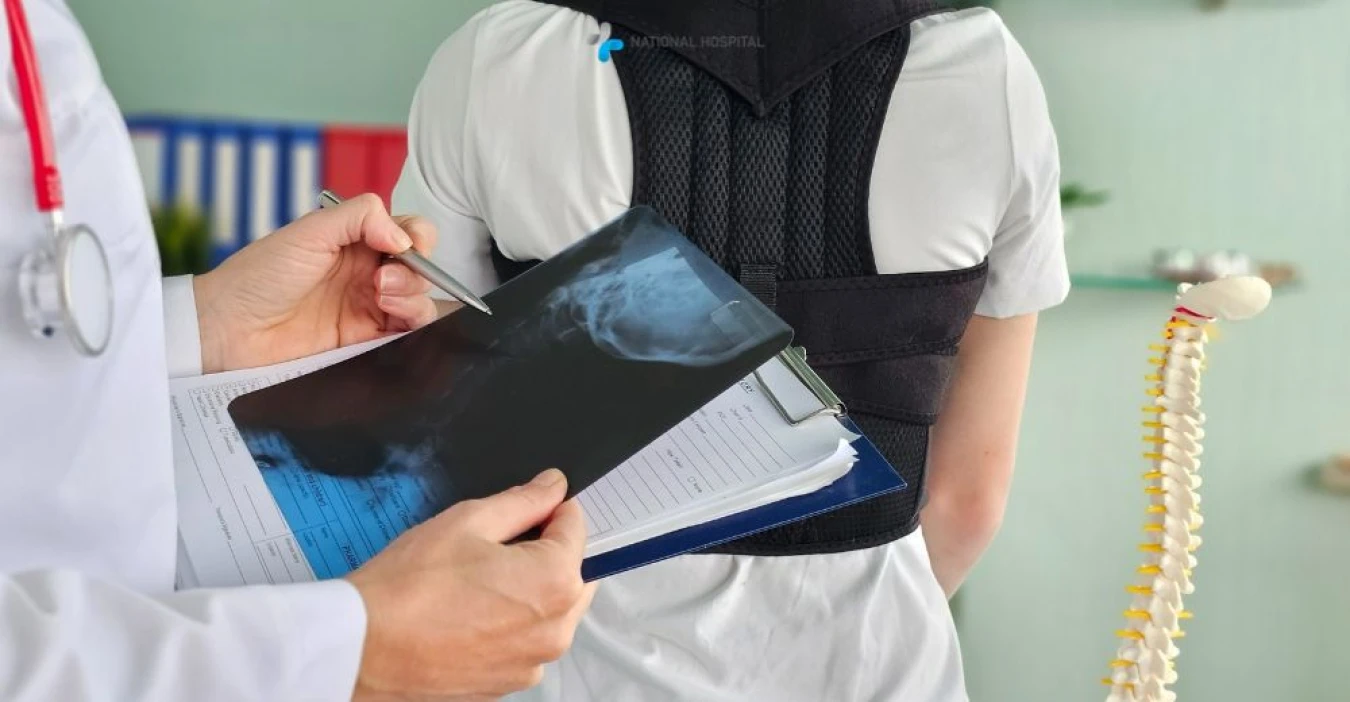
Before determining the appropriate treatment, the doctor will perform examinations to assess the shape, location, and degree of spinal curvature. These may include:
The doctor evaluates body posture, shoulder and pelvic alignment, waist symmetry, and back shape. One examination that may be performed is the Adam's Forward Bend Test, in which the patient is asked to bend forward so the doctor can check for possible spinal rotation or a prominence on one side of the back.
X-rays are used to examine the shape of the spine and measure the degree of curvature using the Cobb angle. The results help doctors monitor whether the curvature changes over time.
An MRI may be recommended if certain symptoms are present, such as unusual pain, neurological problems, or suspected abnormalities involving the nerves and structures surrounding the spine.
A CT scan provides a more detailed view of the bone structure. In certain cases, it may be used to evaluate bone abnormalities or help plan surgery.
Not every patient needs all of these examinations. The doctor will determine which tests are appropriate based on the patient's age, symptoms, and initial evaluation results.
The type of surgery is selected based on the patient's age, degree of curvature, spinal flexibility, and the underlying cause of scoliosis. Several procedures may be considered, including:
Spinal fusion is one of the most common procedures performed to treat severe scoliosis. During this procedure, the doctor corrects the position of the curved vertebrae and joins selected vertebrae using bone grafts or bone substitutes. Implants such as screws and metal rods may be used to maintain the position of the spine while the bones fuse.
The goal of spinal fusion is to maintain the correction of the spinal curvature and prevent further progression in the treated area. Once the fusion process is complete, the fused vertebrae no longer move independently as they did before.
Vertebral Body Tethering is a scoliosis correction technique that does not involve permanently fusing the treated vertebrae. The doctor places screws in the front portion of the vertebrae and connects them using a specialized cord called a tether. In patients who are still growing, tension on the tether can help guide spinal growth, allowing the curvature to gradually improve.
This procedure is suitable only for selected patients, particularly children or adolescents who still have growth potential. Not all patterns or degrees of spinal curvature can be treated using this method.
Osteotomy is a procedure in which part of the bone is cut or removed to help correct spinal deformities that are rigid or difficult to correct using conventional techniques. For certain types of scoliosis, osteotomy may be combined with spinal fusion and implant placement to achieve spinal balance and stability. This technique is generally considered for more complex cases that require specialized surgical planning.
The stages of surgery depend on the type of procedure selected. In scoliosis surgery involving spinal fusion, the process generally includes the following stages:
The doctor will conduct a comprehensive evaluation to assess the patient's condition and determine the surgical plan. Preparation may include:
In general, spinal fusion surgery for scoliosis is performed under general anesthesia. The procedure involves the following steps:
The surgery may take several hours, depending on the degree of curvature, the number of vertebrae being treated, and the complexity of the procedure.
Some patients may gradually return to school or work within a few weeks, while recovery before resuming more strenuous physical activities may take several months. The doctor will determine when it is safe to resume these activities based on examination results and recovery progress.
Yes. Most patients with scoliosis do not need surgery. Treatment is tailored to the patient's age, degree of curvature, risk of progression, and symptoms. Non-surgical treatment options may include:
Non-surgical treatment does not always eliminate spinal curvature, but it may help control the progression of the condition and maintain physical function.
Scoliosis treatment should be tailored to each patient's condition and degree of spinal curvature. Through a comprehensive examination, doctors can determine the appropriate care plan to help maintain spinal function, support mobility, and prevent the condition from progressing further.
National Hospital provides scoliosis evaluation and treatment services tailored to patients' medical needs. Consult an orthopedic spine specialist to understand the available treatment options and determine the next steps in your care.
Identify spinal conditions early so that appropriate treatment can be provided. Schedule a consultation with an orthopedic specialist at National Hospital.
References
1. Scoliosis Research Society - Surgery
2. American Academy of Orthopaedic Surgeons (AAOS) - Surgical Treatment for Scoliosis






 info@national-hospital.com
 Suggestion
 Login